Sermon for Evensong (Trinity X)
Homily for the Eighteenth Sunday of Year C: A Sermon about Stuff
Homily for 17th Sunday of Year C: Luke 11:1-13
A thought for the day from Mother Mary Clare
Homily for the Fourteenth Sunday of Year C
SS Peter and Paul, Apostles
St Paul’s Advice to a Bishop (today’s Epistle)
|
4 Διαμαρτύρομαι ἐνώπιον τοῦ θεοῦ καὶ Χριστοῦ Ἰησοῦ, τοῦ μέλλοντος κρίνειν ζῶντας καὶ νεκρούς, καὶ τὴν ἐπιφάνειαν αὐτοῦ καὶ τὴν βασιλείαν αὐτοῦ· 2 κήρυξον τὸν λόγον, ἐπίστηθι εὐκαίρως ἀκαίρως, ἔλεγξον, ἐπιτίμησον, παρακάλεσον, ἐν πάσῃ μακροθυμίᾳ καὶ διδαχῇ. 3 ἔσται γὰρ καιρὸς ὅτε τῆς ὑγιαινούσης διδασκαλίας οὐκ ἀνέξονται, ἀλλὰ κατὰ τὰς ἰδίας ἐπιθυμίας ἑαυτοῖς ἐπισωρεύσουσιν διδασκάλους κνηθόμενοι τὴν ἀκοήν, 4 καὶ ἀπὸ μὲν τῆς ἀληθείας τὴν ἀκοὴν ἀποστρέψουσιν, ἐπὶ δὲ τοὺς μύθους ἐκτραπήσονται. 5 σὺ δὲ νῆφε ἐν πᾶσιν, κακοπάθησον, ἔργον ποίησον εὐαγγελιστοῦ, τὴν διακονίαν σου πληροφόρησον.
|
4 I charge you in the presence of God and of Christ Jesus, who is to judge the living and the dead, and by his appearing and his kingdom: 2 preach the word; be ready in season and out of season; reprove, rebuke, and exhort, with complete patience and teaching. 3 For the time is coming when people will not endure sound teaching, but having itching ears they will accumulate for themselves teachers to suit their own passions, 4 and will turn away from listening to the truth and wander off into myths. 5 As for you, always be sober-minded, endure suffering, do the work of an evangelist, fulfil your ministry.
|
Fulton Sheen on Mary
A Thought for the Day from Fulton J. Sheen
Sermon for the Third Sunday after Trinity: Luke 15:1-10
Homily for the Sixth Sunday of Easter: Jn 14:23-29
Sermon for Evensong of the Second Sunday after Easter: “Did I not tell you that if you believed you would see the glory of God?”
Sermon for Evensong of the First Sunday after Easter: Isaiah 52:13–53:12; Luke 23:13–35
Good Friday
Feria V in Cena Domini – The Mass of the Lord’s Supper: Exod. 12:1-8; ICor 11:23-26; Jn 13:1-15
Catechetical Easter Homily ascribed to John Chrysostom [PG 59:721-4]
|
Εἴ τις εὐσεβὴς καὶ φιλόθεος, ἀπολαυέτω τῆς καλῆς ταύτης πανηγύρεως· εἴ τις δοῦλος εὐγνώμων, εἰσελθέτω χαίρων εἰς τὴν χαρὰν τοῦ Κυρίου αὐτοῦ· εἴ τις ἔκαμενηστεύων, ἀπολαβέτω νῦν τὸ δηνάριον· εἴ τις ἀπὸ πρώτης ὥρας εἰργάσατο, δεχέσθω σήμερον τὸ δίκαιον ὄφλημα· εἴ τις μετὰ τὴν τρίτην ἦλθεν, εὐχαριστῶν ἑορτάσῃ· εἴ τις μετὰ τὴν ἕκτην ἔφθασε, μηδὲν ἀμφιβαλλέτω· καὶ γὰρ οὐδὲν ζημιοῦται· εἴ τις ὑστέρησεν εἰς τὴν ἐννάτην, προσελθέτω μηδὲν ἐνδοιάζων· εἴ τις εἰς μόνην ἔφθασε τὴν ἑνδεκάτην, μὴ φοβηθῇ τὴν βραδυτῆτα. Φιλότιμος γὰρ ὢν ὁ Δεσπότης δέχεται τὸν ἔσχατον, καθάπερ καὶ τὸν πρῶτον· ἀναπαύει τὸν τῆς ἑνδεκάτης,ὡς τὸν ἐργασάμενον ἀπὸ τῆς πρώτης· καὶ τὸν ὕστερον ἐλεεῖ, καὶ τὸν πρῶτον θεραπεύει· κἀκείνῳ δίδωσι, καὶ τούτῳ χαρίζεται. Καὶ τὴν πρᾶξιν τιμᾷ, καὶ τὴν πρόθεσιν ἐπαινεῖ. Οὐκοῦν εἰσέλθητε πάντες εἰς τὴν χαρὰν τοῦ Κυρίου ἡμῶν, καὶ πρῶτοι καὶ δεύτεροι τὸν μισθὸν ἀπολάβετε, πλούσιοι καὶ πένητες μετὰ ἀλλήλων χορεύσατε, ἐγκρατεῖς καὶ ῥᾴθυμοι τὴν ἡμέραν τιμήσατε, νηστεύσαντες καὶ μὴ νηστεύσαντες εὐφράνθητε σήμερον. Ἡ τράπεζα γέμει, τρυφήσατε πάντες· ὁ μόσχος πολὺς, μηδεὶς ἐξέλθοι πεινῶν. Πάντες ἀπολαύσατε τοῦ πλούτου τῆς χρηστότητος. Μηδεὶς θρηνείτω πενίαν· ἐφάνη γὰρ ἡ κοινὴ βασιλεία· μηδεὶς ὀδυρέσθω τὰ πταίσματα· συγγνώμη γὰρ ἐκ τοῦ τάφου ἀνέτειλε· μηδεὶς φοβείσθω τὸν θάνατον· ἠλευθέρωσε γὰρ ἡμᾶς ὁ τοῦ Σωτῆρος θάνατος· ἔσβεσεν αὐτὸν ὑπ’ αὐτοῦ κατεχόμενος· ἐκόλασε τὸν ᾅδην κατελθὼν εἰς τὸν ᾅδην· ἐπίκρανεν αὐτὸν γευσάμενον τῆς σαρκὸς αὐτοῦ. Καὶ τοῦτο προλαβὼν Ἡσαΐας ἐβόησεν· Ὁ ᾅδης, φησὶν, ἐπικράνθη. Συναντήσας σοι κάτω ἐπικράνθη· καὶ γὰρ καθῃρέθη· ἐπικράνθη· καὶ γὰρ ἐνεπαίχθη. Ἔλαβε σῶμα, καὶ Θεῷ περιέτυχεν· ἔλαβε γῆν, καὶ συνήντησεν οὐρανῷ· ἔλαβεν ὅπερ ἔβλεπε, καὶ πέπτωκεν ὅθεν οὐκ ἔβλεπε. Ποῦ σου, θάνατε, τὸ κέντρον; ποῦ σου, ᾅδη, τὸ νῖκος; Ἀνέστη Χριστὸς, καὶ σὺ καταβέβλησαι· ἀνέστη Χριστὸς, καὶ πεπτώκασι δαίμονες· ἀνέστη Χριστὸς, καὶ χαίρουσιν ἄγγελοι· ἀνέστη Χριστὸς, καὶ νεκρὸς οὐδεὶς ἐπὶ μνήματος. Χριστὸς γὰρ ἐγερθεὶς ἐκ νεκρῶν, ἀπαρχὴ τῶν κεκοιμημένων ἐγένετο· αὐτῷ ἡ δόξα καὶ τὸ κράτος εἰς τοὺς αἰῶνας τῶν αἰώνων. Ἀμήν.
|
If anyone is a devout lover of God, let them rejoice in this beautiful radiant feast. If anyone is a faithful servant, let them gladly enter into the joy of their Lord. If any are wearied with fasting, let them now reap their reward. If any have laboured since the first hour, let them receive today their just reward. If any have come after the third hour, let them celebrate the feast with thankfulness. If any have arrived after the sixth hour, let them not doubt, for they will sustain no loss. If any have delayed until the ninth hour, let them not hesitate but draw near. If any have arrived at the eleventh hour, let them not fear their lateness. For the Master is gracious and welcomes the last no less than the first. He gives rest to those who come at the eleventh hour just as kindly as those who have laboured since the first hour. The first he fills to overflowing: on the last he has compassion. To the one he grants his favour, to the other pardon. He does not look only at the work: he looks into the intention of the heart. Enter then, all of you, into the joy of your Master. First and Last, receive alike your reward. Rich and poor dance together. You who have fasted and you who have not, rejoice today. The table is fully laden: let all enjoy it. The fatted calf is served: let no-one go away hungry. Come all of you, share in the banquet of faith: draw on the wealth of his mercy. Let no-one lament their poverty; for the universal kingdom has been revealed. Let no-one weep for their sins; for the light of the forgiveness has risen from the grave. Let no-one fear death; for the death of the Saviour has set us free. He has destroyed death by undergoing hell. He has despoiled hell by descending into hell. Hell was filled with bitterness when it tasted his flesh, as Isaiah foretold: ‘Hell was filled with bitterness when it met you face-to-face below’ – filled with bitterness, for it was brought to nothing; filled with bitterness, for it was mocked; filled with bitterness, for it was overthrown; filled with bitterness, for it was destroyed; filled with bitterness, for it was put in chains. It received a body, and encountered God. It received earth, and confronted heaven. It received what it saw, and was overpowered by what it did not see. O death, where is your sting? O hell, where is your victory? Christ is risen, and the demons are fallen. Christ is risen, and the angels rejoice. Christ is risen, and life reigns in freedom. Christ is risen, and the grave is emptied of the dead. For Christ being raised from the dead has become the first-fruits of those who sleep. To him be glory and dominion to the ages of ages. Amen.
|
Thought for the Day: The Vineyard of Souls
Lent IV Evensong: IITim 4:1-18
O bring them back, good Shepherd of the sheep,
back to the faith which saints believed of old,
back to the Church which still that faith doth keep;
soon may we all one Bread, one Body be,
through this blest Sacrament of unity.
A Thought for the Day from Fulton Sheen
There are three different ways in which we may judge others: with our passions, our reason, and our faith. Our passions induce us to love those who love us; our reason makes us love all people within certain limits; our faith makes us love everyone, including those who do us harm and are our enemies.
Homily for the 4th Sunday of Year C – Being prophetic
Septuagesima Evensong
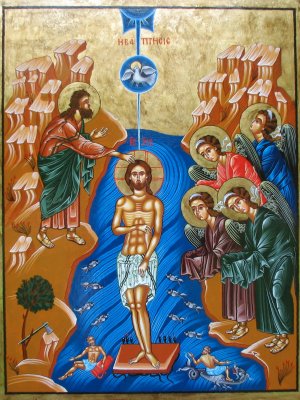
The Baptism of the Lord
In Christ’s Baptism we see a God who walks with us, who is not a cold, remote figure; but who, for love of us, comes among us, and is one with us, and who shows us the way to his Father. Christ’s Baptism is an act of obedience to God the Father, an act of humility and of healing and restoration – the work of God in Christ, done for our sake. What began at the Annunciation, and was brought about at the Incarnation, and made manifest to the whole world at the Epiphany, is deepened: the world is invited to share in the saving love of God through baptism.
At the beginning of his public ministry, Jesus shows humanity the way to the Father, through himself. The world sees the generous love of God, which heals and restores us, from the darkness of the dungeon of sin and evil, to the light and life of the Kingdom of God. As our baptism is a sharing in the death and resurrection of Jesus, so his baptism points to the Cross, where streams of blood and water flow to cleanse and heal the world. We see the love of the Father, the power of the Spirit, and the obedience of Son, and all for us, who are so weak and foolish, and who need God’s love and healing, and forgiveness.
We need this, the whole world needs it, but is too proud to turn to a God of love, for fear of judgement, knowing that they deserve to be cut off forever, and yet it is exactly such people, such lost sheep that Our Lord comes to seek, whom he enfolds in his loving arms on the Cross, whom he washes in the waters of baptism, so that all may be a part of him, regardless of whom or what they are, and what they have done. Salvation is the free gift of God and open to all who turn to him.
In our suspicious modern world that gift is spurned and mocked, by those who feel that they can no longer trust the church, or denounce it is as hypocritical, an oppressor of one group or another. To which we can only reply with open doors, open arms, and open hearts – the church may be full of sinners and hypocrites and there’s always room for a few more! God in Christ is nothing if not generous, and so the Church, his body is called to the same generosity of spirit. With the open invitation comes a call to repentance, to a fundamental change of mind, which sees us turn away from sin to God.
Here is where I suspect it gets difficult for humanity, we know that sin is wrong, but we enjoy it, we can soothe our conscience with the fiction that something is not a sin: that it doesn’t hurt or harm us, we can even twist the Gospel to our own ends. But these will not do, because in them we say that we know better than God – the sin of pride, that primal sin which separates humanity from God. This was the problem Christ comes to fix, to heal and restore our nature, through his grace, to feed us with Word and Sacrament that we might share in the life and love of God.
We need to take to heart the words of advice written by St Paul to Titus and the Church in Crete: given that ‘the grace of God has appeared, bringing salvation for all people’ (Titus 2:11) the Church has to respond to that grace, that free gift of a loving God, by living in a certain way, the Church is there to train us to renounce, to turn our back on ‘ungodliness and worldly passions’ – using our lives and our bodies which fall short of what is expected of us. Notice the word ‘train’: it’s a process, very few people indeed can run a marathon without training; we need help and practice to turn our lives around together, as a community of faith. It takes time, and hard work and love, but it is something which we can do together – people will fail, but can be picked up, and helped to continue, that’s what healing and repentance are all about. It’s about saying ‘we can be better, we can do better together’ if we truly let the love of God into our hearts and turn away from the past and look forward to a future of hope and glory in Christ. So then, let us live out our faith and our baptism together, turning from sin to new life in Christ, and encourage others so to do, so that all creation may resound with the praise of God the Father, God the Son, and God the Holy Spirit, to whom be ascribed as is most right and just, all might, majesty, glory, dominion, and power, now and forever.