To the bad conscience God appears always the God of wrath. The boy who broke the vase by throwing a ball at it says to his mother: ‘Now Mummy, don’t get mad.’ Anger is not in the mother; anger is in the boy’s projection to his mother of his own sense of justice. Anger is not in God; anger is in our disordered selves.
Fulton Sheen Preface to Religion, 1946: 50
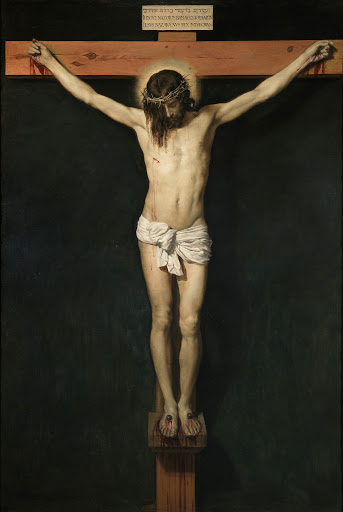
The Cross of Calvary stands at the crossroads of three prosperous civilizations as eloquent testimony to the uncomfortable truth that the successful people, the social leaders, the people who are labelled niceare the ones most capable of crucifying the Divine Truth and the Eternal Love.
Fulton Sheen Peace of Soul, 1954: 69
Growing up is probably best described as not an easy or indeed a pleasant process. Learning right from wrong, what to do and how to do it, takes time and invariably involves mistakes. The problem comes not from making mistakes themselves but rather from not learning from them. Learning lessons requires humility – knowing that you do not know everything, that you have much to learn, that you are not the finished article but rather a work in progress. That through God’s grace working in you, you may become something greater, something better than you are.
This recognition of one’s limitations and failings opens up a space where God can be at work in our lives, transforming us to live the Divine life of Love. This is the narrow door of this morning’s gospel: narrow because if we have a sense of our own self-importance or our worth which is too big then we cannot enter – our sense of who and what we are gets in the way. It’s not enough to have eaten and drunk in God’s presence, to have been around when he taught in our streets – it’s a question of engagement – are you a bystander or have you been fed by God, with God, and through the grace of the sacrament lived out your faith in your life – living out the love of God in your life? Have you been around when the Gospel has been taught, or have you both listened to it and lived it out in your life?
It isn’t an easy thing to do – it is costly, difficult, and hard and it is something which we need to do together. That’s after all what the Church is for – it’s a collection of sinners trying to live in response to the love of God which has been poured out on us. It’s something which we have to do together – loving each other, loving our enemies, living out forgiveness as we have been forgiven and loved by God. It’s a radically different way of life to that which the world would encourage us to practice. It isn’t easy, it’s really difficult, and we willfail at it, but that’s the point! The point is not that we fail and that’s it, but that we keep trying, loving and forgiving, together, built up as the body of Christ, humble enough to let God be at work in us, transforming our nature by his Grace – making us the people of God, living out his love in the world.
We have come here this morning to be fed by Word and Sacrament, to be nourished by God, with God, to have false ideas of who and what we are stripped away, and recognising our dependence upon God and each other, to try and live out our faith – to grow in holiness together as the people of God, loved, healed, and restored by him – and through this to grow up into the full stature of Christ and to transform the world that it may reflect more fully the glory of God. The Gospel really is this radical, it’s not nice, or comfortable, it’s challenging and difficult, and utterly wonderful, releasing people from the slavery of this world and its false ideas to live in the freedom and love of God.
We have to look to Jesus and to His Cross to see God’s love for us. What is shameful in the eyes of the world, we can see as glorious – true love which gives regardless of the cost, which forgives sins, which heals and restores broken sinful humanity, which gives us the hope of heaven. This is grace the free gift of God, giving Himself who shared our humanity so that we might share His divinity, strengthened by Word and Sacrament to live out our faith.
The world cannot understand this, it doesn’t make sense, it isn’t logical, it shouldn’t happen. But it does, and it calls the world to something different, something radical and world-changing, which can re-form human society in the image of God and His Love. It will be hard: the world will laugh at us and our feeble attempts to follow God. Yet, we believe in a God who loves us, and who would never laugh at us, or belittle our feeble efforts to follow Him and conform ourselves to Him. So may the fire of God’s love be kindled in our hearts and lives, that we may be ablaze for Him, aflame with love for God and neighbour, love our enemies and our friends, and lets us change the world, not just this village, or this county, but all of God’s creation, all of humanity, that they may know God’s love and that it may rule in their hearts and lives.
God takes the initiative in Christ to help us to have life in its fullness – it’s not a life without rules, or discipline, it isn’t easy, it’s costly and difficult, but it is good and rewarding. It may not feel like that, we may struggle to experience its goodness or even its rewards in this life, but it prepares us for an eternity with God, in his closer presence. Humility is the key – in it we recognise our utter dependence upon God, our own sinfulness, our need to be loved and to share that love with others. God loves us not because we are loveable, but that through His love we might become lovely. So let us hasten to enter through the narrow gate, so that God may continue to transform our human nature, that his saving love and power may be at work in our hearts and our lives, so that we can transform ourselves and all the world so that it may believe and sing the praise of God the Father, God the Son, and God the Holy Spirit, to whom be ascribed as is most right and just all might, majesty, glory, dominion, and power, now and forever.



 Novus Motus Oxoniensis