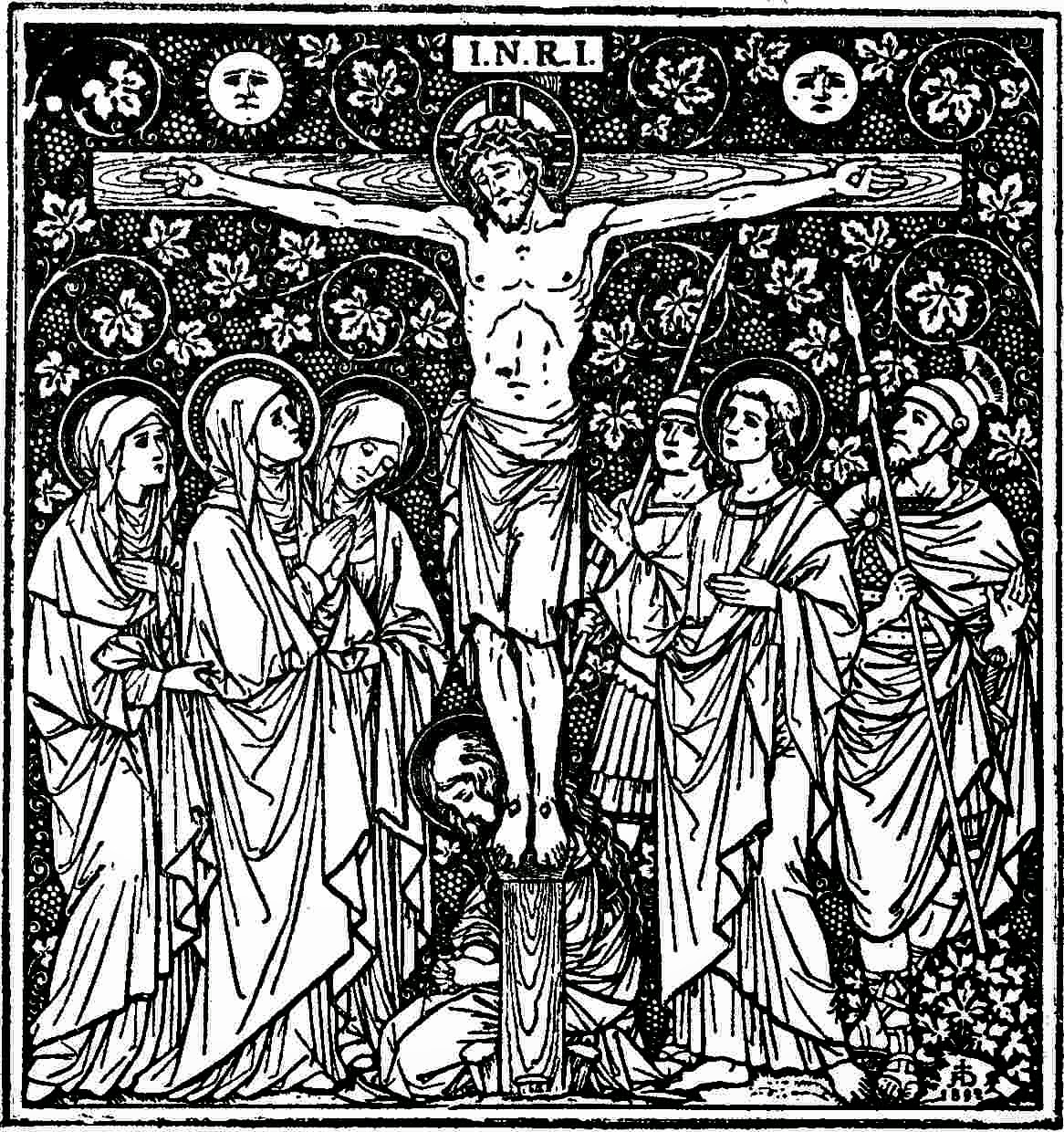
A Thought from S. Teresa of Avila – When discouraged trust in God’s Mercy

Beware, daughters, of a certain kind of humility suggested by the devil which is accompanied by great anxiety about the gravity of our sins.

He disturbs souls in many ways by this means, until at last he stops them from receiving Holy Communion and from private prayer by doubts as to whether they are in a fit state for it, and such thoughts as: ‘Am I worthy of it? Am I in a good disposition?I am unfit to live in a religious community. ‘

Thus Christians are hindered from prayer, and when they communicate, the time during which they ought to be obtaining graces is spent in wondering whether they are well prepared or no.

Everything such a person says seems to her on the verge of evil, and all her actions appear fruitless, however good they are in themselves. She becomes discouraged and unable to do any good, for what is right in others she fancies is wrong in herself.

When you are in this state, turn your mind so far as you can from your misery and fix it on the mercy of God, his love for us, and all that He suffered for our sake.

The Way of Perfection 39:1, 3

mostsacredheartofjesus-bruges

Advice from S. Benedict

Easter V: I am the Vine, You are the Branches

When the Apostle Philip meets an Ethiopian eunuch on the road from Jerusalem to Gaza, he comes across a man reading the prophesy of Isaiah: a financial expert, highly-trusted, and well-educated, a man of power and influence. He’s looking for something, he’s been worshipping God in Jerusalem. Philip asks him if he can understand what he is reading. He replies that he cannot, unless someone shows him the way. ‘Then Philip opened his mouth, and beginning with this Scripture he told him the good news about Jesus.’ (Acts 8:35 ESV). Isaiah’s prophesy is fulfilled in Jesus and this is the proclamation of the Church: we proclaim Jesus Christ and him crucified.
We read scripture so that we can understand it, and see in its words how it discloses the truth of the Word made flesh, who suffered and died for our sake. Isaiah prophesies Our Lord’s Passion and Death, and thus it makes sense, it can be understood, and the more we come to understand, the more we come to know just how much God loves us. The Scriptures, the entire of the Law and the Prophets point to Jesus Christ, they find their meaning and fulfilment in Him, who is the Word of God made flesh. Just like the story of the sacrifice of Isaac by Abraham points to the sacrifice of Christ on the Cross, where God gives his only Son for love of us, it is prefigured by the ram in the thicket, which points to that moment where John the Baptist can cry out ‘Behold the lamb of God who takes away the sins of the world!’

Having been nourished by the Word of God, our unnamed Ethiopian desires baptism:  so that he may be ‘in Christ’ rooted and grafted, close to him, filled with His Spirit, so that he may bear much fruit.

When we are close to Christ, washed clean by our baptism, nourished by Word and Sacrament, we can truly be Christ’s disciples, living in Him, living for Him, proclaiming Him, and bearing much fruit, so that the world may believe and give glory to God the Father, God the Son and God the Holy Spirit

Easter II

The Cross had asked the questions; the Resurrection had answered them…. The Cross had asked ‘Why does God permit evil and sin to nail Justice to a tree?’ The Resurrection answered: ‘That sin, having done its worst, might exhaust itself and thus be overcome by Love that is stronger than either sin or death.’        Thus there emerges the Easter lesson that the power of evil and the chaos of the moment can be defied and conquered, for the basis of our hope is not in any construct of human power but in the power of God, who has given to the evil of this earth its one mortal wound—an open tomb, a gaping sepulchre, an empty grave.

Fulton J. Sheen Cross-Ways

 
This morning as we rejoice in the joy of the Risen Lord, as we are filled with joy, with hope and with love, we can reflect on what the Resurrection does: when Jesus comes and stands among the disciples he says ‘Peace be with you’ Christ’s gift to the world in His Death and Resurrection is Peace, the Peace ‘which passes all understanding’. He shows the disciples his hands and side so that they can see the wounds of love, through which God’s Mercy is poured out on the world to heal it and restore it. In this peace Christ can say to them ‘As the Father sent me, so I send you’ as the baptised people of God the Church is to be a missionary community – one sent to proclaim the Good News of Jesus Christ to the world, that it may share the joy and life of the Risen Lord.
       As well as giving the Apostles the Holy Spirit, ordaining them as the first bishops of the Church, we see that the power of the Cross to bring peace to the world is also the power to absolve sins – priests and bishops can absolve the people of God in God’s name, and by God’s power – this is what the Cross achieves – reconciling us to God and each other. The Church, then, is to be a community of reconciliation, where we are forgiven and we, in turn, forgive, where we are freed from sin, its power and its effects.
       When Christ breathes on the disciples and says ‘Receive the Holy Spirit’ it is this gift of God’s Holy Spirit which transforms them from frightened people sat in a locked room in fear into the confident, joyous proclaimers of the Gospel, such as Peter in his sermon to the people of Jerusalem. In Peter’s sermon we see that all that Christ is and does is confirmed by Scripture – it is the fulfilment of prophesy, such as we find in Isaiah 25:6—9:
 
On this mountain the Lord of hosts will make for all peoples a feast of rich food, a feast of well-aged wine, of rich food full of marrow, of aged wine well refined. And he will swallow up on this mountain the covering that is cast over all peoples, the veil that is spread over all nations. He will swallow up death for ever; and the Lord God will wipe away tears from all faces, and the reproach of his people he will take away from all the earth, for the Lord has spoken. It will be said on that day, “Behold, this is our God; we have waited for him, that he might save us. This is the Lord; we have waited for him; let us be glad and rejoice in his salvation.”
 
       As the Church we know that Jesus is the Messiah, the one who gives freedom to Israel, a freedom from sin – a bringing to completion of what God started in the Exodus, in the crossing of the Red Sea – we too are free, freed by the waters of baptism, sharing in Christ’s Death and Resurrection.
       Thomas was not present with the disciples, he cannot believe in the reality of Jesus’ Resurrection unless he sees with his own eyes, and feels with his own hands – such is his grief, such is his love for Jesus. Our Lord says to him ‘Doubt no longer but believe’ which leads to his confession ‘My Lord and my God’. Blessed are we who have not seen and yet have come to believe, and through this belief we have live in Christ’s name, we have the hope of eternal life and joy with him forever.
       The disciples go from being scared and stuck in an upper room to missionaries, evangelists, spreading the Good News around the world, regardless of the cost, even of sacrificing their own lives to bear witness to the fact that Jesus Christ is the Son of God, that he died for our sins, and that he rose again, on this day for us, that God loves us and tells us to love Him and to love one another. It is a simple and effective message which people still want to hear – we need to tell it to them, in our thoughts, our words and our actions.
       The heart of our faith and the Gospel is forgiveness – no matter how many times we mess things up, we are forgiven. It is this reckless generosity of spirit which people find hard – to believe that they toocan be forgiven, by a loving God, and by their fellow Christians. That we can, despite our manifold shortcomings be a people of love, and forgiveness, and reconciliation. That God’s Grace will in the end not abolish our nature, but perfect it, that being fed by Christ, with Christ: so that we too may become what He is. That faced with the sad emptiness of the world, and its selfishness, its greed, we can be filled with joy, and life, and hope. That like the first apostles we too can spread the Gospel: that the world may believe.
It’s a tall order, perhaps, but one which God promises us. That is what the reality of the Resurrection is all about, it’s either nothing, in which case we are the most pitiable of deluded fools – idiots who are more to be pitied than blamed, orit is the single most important thing in the world. It should affect allof us, every part of our life, every minute of every day, allthat we do, all that we say, all that we are. This may not fit in with a reserved British mentality, we think we’re supposed to be polite and not force our views on others. But this simply will not do. We are, after all, dealing with people’s souls, their eternal salvation, it’s a serious matter. And what we offer people is entirely free, can change their lives for the better, and make life worth living.


So let us be filled with the joy of the Resurrection this Easter, let us share that joy with others, may it fill our lives and those of whom we meet with the joy and love of God, who has triumphed and who offers us all new life in Him, that all that we do, all that we are, all that we say or think may give glory to God the Father, God the Son, and God the Holy Spirit, to whom be ascribed as is most right and just, all might, majesty, dominion and power, now and forever.

Good Friday 2015


Love has three and only three intimacies: speech, vision, and touch. These three intimacies God has chosen to make his love intelligible to our poor hearts. God has spoken: he told us that he loves us: that is revelation. God has been seen: that is the incarnation. God has touched us by his grace: that is redemption. Well indeed, therefore, may he say: ‘What more could I do for my vineyard than I have done? What other proof could I give my love than to exhaust myself in the intimacies of love? What else could I do to show that my own Sacred Heart is not less generous than your own?’
          If we answer these questions aright, then we will begin to repay love with love …. then we will return speech with speech which will be our prayer; vision with vision which will be our faith; touch with touch which will be our communion.
Fulton J Sheen The Eternal Galilean
The prophets of Israel spoke the word of the Lord to the people of their day – there is a lot in the prophet Isaiah which relates directly to the exile of Israel in Babylon – but this is not the only way that such scripture can be read. As well as talking to the present, they speak to the future and tell of things to come. They like all of the Hebrew Scriptures find their fullest meaning in Jesus Christ, the Word of God made flesh. He is the fulfilment of Scripture – it finds its truest and fullest meaning in Him: the Scriptures point to something beyond themselves, to our Lord and Saviour, and it is thus understandable that there have been times when Isaiah has been called the fifth Gospel, because of his prophesies especially concerning Our Lord’s Birth, Suffering and Death.
This is not a new phenomenon; in the 8th Chapter of the Acts of the Apostles we see the meeting of Philip and an Ethiopian eunuch, who is reading this very passage which we have just heard – the Suffering Servant. Philip asks him if he can understand what he is reading. He replies that he cannot, unless someone shows him the way. ‘Then Philip opened his mouth, and beginning with this Scripture he told him the good news about Jesus.’ (Acts 8:35 ESV). Isaiah’s prophesy is fulfilled in Jesus and this is the proclamation of the Church: we proclaim Jesus Christ and him crucified.
We read scripture so that we can understand it, and see in its words how it discloses the truth of the Word made flesh, who suffered and died for our sake. Isaiah prophesies Our Lord’s Passion and Death, and thus it makes sense, it can be understood, and the more we come to understand, the more we come to know just how much God loves us.
       Today Christ is both priest and victim, and upon the altar of the Cross he offers himself as a sacrifice for sin, for the salvation of humanity. A new covenant is made in his blood which restores the relationship between God and humanity, we are shown in the most graphic way possible how much God loves us, and thus how much we are to love God and to love each other, with that costly self-sacrificial love embodied by Our Lord in his Passion and Death.
After scourging him the soldiers put a purple robe around our Lord, they crown him with thorns, and give him a reed for a sceptre. They think they’re being clever and funny: they’re having a laugh, mocking a man about to be executed, but this is God showing the world what true kingship is: it is not pomp, or power, the ability to have one’s own way, but the Silent Way of suffering love. It shows us what God’s glory is really like: it turns our human values on their head and inaugurates a new age, according to new values, and restores a relationship broken by human sin.
          In being raised upon the Cross, our Lord is not dying the death of a common criminal, but rather reigning in glory – the glory of God’s free love given to restore humanity, to have new life in him. His hands and feet and side are pierced, as wounds of love, to pour out God’s healing life upon the world. In his obedience to the Father’s will, he puts to an end the disobedience of humanity’s first parent. Here mankind who fell because of a tree are raised to new life in Christ through his hanging on the tree.  Christ is a willing victim, the Lamb of God who takes away the sins of the world, the Silent lamb led to his slaughter, the Good Shepherd who lays down his life for his sheep that have gone astray. At the time when the Passover lambs are slaughtered in the temple, upon the Altar of the Cross, Christ as both priest and victim offers himself as the true lamb to take away the sins of the whole world, offers his death so that we may have life, new life in Him.
          Death and hell, the reward of sin, have no power over us: for in dying, and being laid in a stranger’s tomb, Christ will go down to Hell, to break down its doors, to lead souls to heaven, to alter the nature of the afterlife, once and for all. Just when the devil thinks he’s won, then in his weakness and in his silence Christ overcomes the world, the flesh, and the devil. The burden of sin which separates humanity from God is carried on the wood of the Cross.
On the way to Calvary our Lord falls three times such is the way, such was the burden, so we too as Christians, despite being reconciled to God by the Cross, will fall on our road too. We will continue to sin, but also we will continue to ask God for his love and mercy. But those arms which were opened on the cross will always continue to embrace the world with God’s love.
We don’t deserve it and we haven’t earned it, that’s the point, but it is there to help us become the people God wants us to be: to be strengthened, fed, healed, and restored by him: to die to sin and be raised to new life, and to share that life and love with others, that the world might believe and be saved through him. Christ pays the debt which we cannot to reconcile humanity to his loving and merciful Father. He shows us the meaning of true love: that we might live it out in our lives, forgiving one another, bearing our own cross, and living lives of love for love of him who died for love of us.
          We should glory in the Cross of our Lord Jesus Christ, for he is our salvation, our life, and our resurrection, through him we are saved and made free.

Homily for Lent V

During the Sermon on the Mount, Jesus reflects upon who and what he is and what he has come to do (Mt 5:17) “Do not think that I have come to abolish the Law or the Prophets; I have not come to abolish them but to fulfil them.” Christ comes to fulfil the law rather than to abolish it, and to inaugurate a new covenant in his blood which will flow from Calvary. This has been pointed to in Scripture: in the first reading this morning the prophet Jeremiah looks forward to a future covenant that will bring faithless sinful Isræl back to the Lord their God. They broke the covenant, they were unfaithful, and though they were married to the Lord their God, here we see not divorce but covenant faithfulness – it’s how God is, this is God’s love in action: self-giving, sacrificial, and costly. Christ fulfils Scripture – it finds its fullness and its true meaning in and through him, the Word of God made Flesh for our sake. God in Christ restores and heals that which was broken through human sinfulness: ‘But this is the covenant that I will make with the house of Isræl after those days, says the LORD: I will put my law within them, and I will write it on their hearts; and I will be their God, and they shall be my people’ Ours is a God who forgives our iniquities and forgives our sins through the New Covenant in Jesus’ blood.
       Jesus Christ is our great high priest: priests offer sacrifice for sin, as on Yom Kippur, the Jewish Day of Atonement where once the people were sprinkled with blood each and every year, whereas under the New Covenant, the covenant of grace rather than law, Christ the mediator of the new covenant sheds his own blood as both priest and victim to reconcile us with God. He is a priest after the order of Melchizedek, whose name means King of Righteousness, the King of Salem, better known as Jerusalem, brings out bread and wine, which point to the Eucharist, he is a priest of God Most High, before the priesthood of Aaron, the Levitical priesthood, so this is the true worship of Almighty God which points to Christ and finds its fulfilment in and through Him, who suffered for our sins.
In this morning’s Gospel some Greeks go up to Philip and say ‘Sir, we want to see Jesus’. They approach a disciple with a Greek name, and though they are not Jews themselves, they try to follow the law and to worship God. They are good people with an innate sense of the religious and they have a simple request: they want to see Jesus. Nearly 2000 years later there are people who will ask exactly the same question. What can be said to them? If they come to Mass on a Sunday morning, they will meet the Lord in Word and Sacrament. But will they also see Jesus in us Christians who are the body of Christ? We too are to be His presence in the world. Everything that we say, or think, or do, can proclaim Christ and his saving love to the world. It is our duty as Christians to try at all times and in every way to model our lives upon Christ’s, and by our sharing in his passion, death, and resurrection, to form our lives so that they may reflect his glory so that the world may believe. Each and every careless word and thoughtless action speaks to the world and says that we are hypocrites, who do not practice what we preach. We are perhaps judged more harshly nowadays than at any time before – ours is a world which does not know or understand forgiveness; but we should nonetheless try with all the strength we can muster to live Christ’s life in the world.
       ‘Now the hour has come for the son of man to be glorified’ Jesus Christ is looking towards his passion and death. God shows the world the fullness of glory, the most profound expression of self-giving love in the events of his passion and death. This is why we celebrate it: week by week and year by year. We prepare ourselves during Lent to walk with Christ to Calvary and beyond. We see how much God loves us, how much God gives himself for us: totally, completely, utterly. If we serve Jesus we must follow him, and where we are he will be too. In the midst of the troubles which beset the church, Christ is with us. When we are afraid or troubled, Christ is with us, he has felt the same feelings as us, and was given the strength to carry on. When the church is written off as an irrelevance, Christ is with us.
       When secularism appears strong, we should remember our Lord’s words: ‘now sentence is being passed on this world; now the prince of this world is to be overthrown’. The World and the Devil are overcome in Christ’s self giving love, when on the cross he pays the debt which we cannot, he offers us a new way of living a life filled with love, a love so strong as to overcome death, a love which offers us eternal life.
       So then as we continue our journey through Lent our journey to the cross and beyond to the empty tomb of Easter, let us lose our lives in love and service of him who died for us, who bore our sins, who shows us how to live most fully, to be close to God, and filled with his love. Let us encourage one another, strengthen one another, and help each other to live lives which proclaim the truth of God’s saving love. All of us through our baptism share in Christ’s death and resurrection and we should proclaim this truth to the world. This truth, this way, this life, overcomes the world, and turns its selfish values on their head. Together we can love and strengthen and encourage one another to do this together: to be Christ’s body in our love and service of one another, in our proclamation to the world that God loves all humanity and longs, like the father of the Prodigal Son, to embrace us, to welcome us back. And as we do this, growing in love and fellowship we will fulfil the will of God the Father, God the Son and God the Holy Spirit to whom be ascribed as is most right and just, all might, majesty, glory, dominion and power, now and forever… 

Lent IV – Looking to the Cross

For God sent his Son into the world not to condemn the world, but that through him the world might be saved.
It is far too easy nowadays to see the church in a negative way –  it’s the fashionable thing to do – as the church we’re corrupt, we’re filling people’s heads with nonsense. We can be characterised as strange, quaint, and out of touch. It suits people to see us entirely in negative terms: as opposed to certain things. We are prescriptive: we limit people’s freedom, and in failing to practice what we preach, we can be written off as hypocrites, with no right to proclaim objective truth, to offer the world a moral framework, within which to live its life; to offer the world an alternative paradigm, a new way of living and of being through which to have life, and have life in all its fullness. It’s less a valid criticism and more of an excuse for people not to bother. It’s an easy way out, which saves people from the more difficult task of living Christ-like lives of love and self-sacrifice. The church does not claim to be perfect, but rather a collection of sinners justified by the grace of God, through faith in Christ.
          The simple truth is that people like to moan and grumble – we all do, and I’m as guilty of it as anyone, but there is a fundamental difference between being dissatisfied with the way things are and longing for change, and hopefully bringing about good change, change in a god-ward direction, and the corrosive moaning rooted in selfishness, which betrays a lack of trust in God. The Israelites in the desert represent this negative moaning, they are unable or unwilling to trust God to lead them on a journey towards the Promised Land, and while they realise their mistake their poisonous moaning has disastrous consequences for them. And yet even in this they are not abandoned by God, they gaze on the bronze serpent, they look to that which prefigures the Cross, through which God heals his people, taking their sins upon himself. That’s why it appears in stained-glass windows in churches, because it points to the Cross, it’s why when talking about the Cross Jesus mentions it, so that people might understand how and why God loves them and how it might affect their lives.
St Paul in his letter to the Ephesians can state with confidence, ‘For by grace you have been saved through faith, and this is not your own doing; it is the gift of God – not the result of works, so that no one may boast(Eph 2:8-9). It’s not about what we can do, but about what God can do for us. Our relationship with God is the result of a gift, which we can receive and which can transform our lives, if we only let go, and let God…
          This morning’s gospel reminds us of the fundamental truth that God loves us – it is the heart of the Good News – the Gospel, what we preach and what we live as Christians. There are few words as comforting as ‘For God so loved the world that he gave his only Son, so that everyone who believes in him may not perish but may have eternal life. ‘Indeed, God did not send the Son into the world to condemn the world, but in order that the world might be saved through him’ (Jn 3:16-17). They may be familiar to us, they certainly should be, but we must not let our familiarity with them cloud the significance of simply stating that God loves us, does not condemn us, but saves us, in and through Jesus Christ. That’s why we are Christians, it’s why we’re here, and recognising God’s love for us will have a transforming effect upon our lives.
In the Incarnation Jesus comes among us as a poor helpless baby, laid to rest in the rough wood of an animals’ feeding trough. He is cared for through the love of his mother, the Blessed Virgin Mary, who in her love, her service, and obedience, stands as the model for all Christians to follow. She is the first Christian, the greatest, a pattern for us to imitate, of loving trust and obedience, of care and costly love, and a foreshadowing of our great mother the church, through which we are saved by grace through faith.
          Upon the rough wood of the cross, Jesus will suffer and die for us – such is the cost of human sin. His mother, Mary, stands by and watches and weeps. As the church we too should watch and weep for the wounds of human sin and division which still scar Christ’s body. We feel helpless. What can we do? We should do all that we can to live God’s life of sacrificial self giving love: living lives of light, which shine in the darkness. It isn’t easy, but if we try and do it together then all things are possible, through him who loves us.
          The salvation and eternal life which Christ offers freely to all, comes through the church, which we enter in baptism, where we are nourished in word and are sacrament, where we are nourished, given food for the journey, strengthened and taught, to live his risen life, to share in the joys of Easter.
          God cares so much about the world and its people that he takes flesh, and lives a life of love, amidst the messiness of humanity, to show us how to live lives filled with love, life in all its fullness. God in Christ comes among us not to condemn the world but to offer it a way of being, of being truly alive in Him. God has made us for himself, and our hearts are restless until they find their rest in him. The spiritual needs and searching which characterise people in the world around us can be satisfied in God and in God alone, through the church. We can rejoice, and relax our Lenten discipline for a little while to give thanks for the wonderful gift of God’s love in our lives, in the church, and for the world.
          But we also need to trust God, to listen to what he says through Scripture, to be fed by him, and to live lives in accordance with his will and purpose, together, as a family, as a community of love, cared for and supported by our mother, the church. And in so doing we look to Our Lady as Mother of Our Lord and Mother of the Church, as a pattern for love and obedience, as a model for all mothers: loving and tender, putting the needs of others before self, self-giving, sacrificial, and open to both joy and pain, trusting in God.

This, as any mother can tell you, is not easy, it’s difficult, really hard, but its rewards are likewise great. So let us, as we continue our Lenten journey towards the cross, where God shows his love for us most fully and completely, giving his body to be broken and his blood be shed for us, a sacrifice which will be made present here today under the outward forms of bread and wine, to strengthen us to live the risen life of Easter, to offer the world an alternative to selfishness, to self-centredness, to the sin which continues to separate us from God, an alternative shown to us in a self-giving love of mothers, and of our mother the church. So that we may join the Angels in our song of love and praise to the Trinity: Father, Son, and Holy Spirit, to whom..

Lent III Year B


Lent can feel something like a spiritual spring clean, and that’s no bad thing. We, all of us, need opportunities for repentance, to turn away from sin, and to return to the Lord Our God. In this morning’s Gospel we see Jesus in quite an uncompromising mood: this is no ‘Gentle Jesus, meek and mild’ but rather here is the righteous anger of the prophets, a sign that all is not well in the world.
            When Moses receives the Ten Commandments from God on Mt Sinai the first is ‘I am the Lord your God, who brought you out of the land of Egypt, out of the house of slavery; you shall have no other gods before me.’ Could it be that the temple traders in their desire to profit from people’s religious observance have broken this first commandment? The temptation to have power, to be concerned above all else with worldly things: money, power, success, and influence, are still a huge temptation for the Church and the world. We may not mean to, but we do, and while we think of God as loving and merciful, we forget about righteous anger, and our need to repent, to turn away from our sins – the desire to control others and to be so caught up on the ways of the world that we lose sight of who and what we are, and what we are supposed to do and be.
            The Jews demand a sign, and Christ prophesies that if they destroy this temple then he will raise it up in three days: he looks to his death and resurrection to show them where true worship lies – in the person of Jesus Christ. Christians should be concerned with a relationship, our relationship with God, and with each other. Likewise Christians can all too easily forget that Jesus said ‘I have come not to abolish the law and the prophets but to fulfill them’. The Ten Commandments are not abolished by Christ, or set aside, but rather his proclamation of the Kingdom and Repentance show us that we still need to live these out in our lives, to show that we honour God and live our lives accordingly. In his cleansing of the Temple Christ looks to the Cross and to the Resurrection, a stumbling-block to Jews, obsessed with the worship of the Temple, and foolishness to Gentiles who cannot believe that God could display such weakness, such powerlessness. Instead this supreme demonstration of God’s love for us, shocking and scandalous though it is, is a demonstration of the utter, complete, self-giving love of God, for the sake of you and me – miserable sinners who deserve condemnation, but who instead are offered love and mercy to heal us and restore us.
            When we are confronted with this we should be shocked – that God loves us enough to do this, to suffer and die for us, to save us from our sins, and from the punishment that is rightly ours. We do not deserve it, that’s the point. But we are offered it in Christ so that we might become something other than we are, putting away the ways of the world, of power and money, selfishness and sin, to have new life in and through Him.
            To live is to change and to be perfect is to have changed often. If we are changing into Jesus Christ, then we’re on the right track. If we listen to his word in Scripture; if we talk to him in prayer and let him talk to us; if we’re fed by Him and with Him in the Eucharist, by Christ who is both priest and victim, so that we might become what He is – God; if we’re forgiven by Him, through making confession of our sins, not only do we come to understand Jesus, we become like him, we come to share in his divine nature, you, me, all of humanity ideally. We, the People of God, the new humanity, enter into the divine fullness of life, we have a foretaste of the heavenly banquet – we are prepared to enter the new life of the Kingdom, and to live it.

            Lent should be something of a spiritual spring clean, asking God to drive out all that should not be there, preparing for the joy of Easter, to live the Risen Life, filled with God’s grace. In our baptism we died with Christ and were raised to new life in the Spirit. Let us prepare to live that life, holding fast to Our Lord and Saviour, clinging to the teachings of his body, the Church. Let us turn away from the folly of this world, the hot air, and focus on the true and everlasting joy of heaven, which awaits us, who are bought by his blood, washed in it, fed with it. Let us proclaim it in our lives so that others may believe so that all may praise the Father, the Son and the Holy Spirit, to whom be ascribed as is most right and just, all might, majesty, glory, dominion, and power, now and forever…

Homily for Lent I

It is all too easy to see the forty days of Lent, the season of preparation for our celebration of Our Lord’s Passion, Death and Resurrection as a time of sadness and misery. Too often it is seen in entirely negative terms: we focus on what we are giving up. Now the practice of abstaining from bodily pleasures is a good and ancient one, not in and of itself, it is not some sort of holy diet, but rather we turn away from something we enjoy so that we may focus upon something else. The other practices of Lent: prayer and almsgiving are there to focus our minds upon God and other people, so that we may enter the desert of repentance with joy, thinking of the needs of others and growing closer to the God who loves us and longs for our healing, our repentance.
     
  In this morning’s first reading we see a covenant between God and humanity, a sign of God’s love for us, and a promise of reconciliation between God and the world which underlies what Jesus does for us, it allows us to have hope, to see things in an entirely positive way, and to see behind what we do, that it is a means, a means to an end, namely our sanctification, rather than an end in itself. In our second reading from the first letter of Peter, he draws the link between Noah’s ark, which saves people through water, and baptism, which is prefigured in it. Lent is a season of preparation for baptism, so that we can die with Christ and be raised like him and with him to new life in him. For those of us who have been baptised it is good to have a chance to spend the time in Lent praying, drawing closer to the God who loves us, and living out our faith in our lives – we can all do better, especially when we try, and try together, supporting each other, so that we might grow in holiness as the people of God.
When St Antony was praying in his cell, a voice spoke to him, saying ‘Antony, you have not yet come to the measure of the tanner who is in Alexandria.’ When he heard this, the old man arose and took his stick and hurried to the city. When he had found the tanner …. he said to him, ‘Tell me about your work, for today I have left the desert and come here to see you.’
He replied, ‘I am not aware that I have done anything good. When I get up in the morning, before I sit down to work, I say that the whole of the city, small and great, will go into the Kingdom of God because of their good deeds while I will go into eternal punishment because of my evil deeds. Every evening I repeat the same words and believe them in my heart.’
When St Antony heard this he said, ‘My son, you sit in your own house and work well, and you have the peace of the Kingdom of God; but I spend all my time in solitude with no distractions, and I have not come near to the measure of such words.’
It is a very human failure, for far too often we make things far too complicated when all we need to do is to keep things simple. In the story from the Desert Fathers, which we have just heard, St Antony, the founder of monasticism, a great and a holy man, is put to shame by a man who spends his days treating animal skins. The key to it all is the tanner’s humility, his complete absence of pride, and his complete and utter trust in God – his reliance upon him alone.
In this morning’s Gospel we see the beginning of Our Lord’s public ministry – he is baptised by John in the River Jordan before immediately  going into the desert for forty days. He goes to be alone with God, to pray and to fast, to prepare himself for the public ministry of the Proclamation of the Good News, the Gospel.
During this he is tempted by the devil: he faces temptation just like every human being, but unlike us, he resists. The devil tempts him to turn stones into bread. It is understandable – he is hungry, but it is a temptation to be relevant, which the church seems to have given into completely: unless we what we are and what we do and say is relevant to people, they will ignore us.
There is the temptation to have power, symbolised by worshipping the devil. It leads to the misuse of power. The church stands condemned for the mistakes of the past, but in recognising this there is the possibility of a more humble church in the future – a church reliant upon God and not on the exercise of power.
There is the temptation to put God to the test – to be spectacular and self-seeking. Whenever we say ‘look at me’ we’re not saying ‘look at God’.
Jesus resists these temptations because he is humble, because he has faith, and because he trusts in God. It certainly isn’t easy, but it is possible. It’s far easier when we do this together, as a community, which is why Lent matters for all of us. It’s a chance to become more obedient, and through that obedience to discover true freedom in God. It’s an obedience which is made manifest on the Cross – in laying down his life Jesus can give new life to the whole world. He isn’t spectacular – he dies like a common criminal. He has no power, he does not try to be relevant, he is loving and obedient and that is good enough.
It was enough for him, and it should be for us. As Christians we have Scripture and the teaching of the Church, filled with his Spirit, to guide us. We can use this time of prayer and fasting to deepen our faith, our trust, our understanding, and our obedience, to become more like Jesus, fed by his word and sacraments – to become more humble, more loving, living lives of service of God and each other.  It leads to Jesus’ proclamation of the kingdom: ‘The time is fulfilled, and the kingdom of God has come near; repent, and believe in the good news.’ Words as true now as then, which the world still longs to hear, and which we need to live out in our lives, so that the world may believe and give glory to God the Father, God the Son, and God the Holy Spirit, to whom be ascribed as is most right and just, all might, majesty, glory dominion and power, now and forever.
duccio_di_buoninsegna_040

Sexagesima Year B


About 1700 years ago the passage from the Book of Proverbs which is the Old Testament Reading which we have just heard was at the centre of a theological controversy which threatened the nature and existence of Christianity as we know it. Arius, a priest of Alexandria used the passage ‘The Lordcreated me at the beginning of his work, the first of his acts of long ago. Ages ago I was set up, at the rst, before the beginning of the earth. When there were no depths I was brought forth, when there were no springs abounding with water. Before the mountains had been shaped, before the hills, I was brought forthto prove that Wisdom, which was understood as the Logos, the Word of God, the Creative Intelligence was not pre-existent, that it was a creation, and that ‘there was a time when he was not’. He may have been attempting to uphold what he understood as monotheism and the supremacy of God the Father, but in so doing he threatened the very nature of Christianity itself: denying the eternal nature of the Son of God, seeing Him as a creature, something created, something less than God.

        His position caused something of a fightback, and the church began to define the nature of God the Father, and God the Son with greater clarity, and while the orthodox position sometimes found favour with Imperial power, and sometimes did not, in the end political power could not enforce heresy. The views of Arius while condemned by the church and seemingly dead and buried once again found widespread fame with the arrival in 2003 of Dan Brown’s novel, The Da Vinci Code, with which you are no doubt familiar. I’ve read it, it is a rip-roaring page-turner of a book, but it is not based on the truth, it is a work of fiction, which may be plausible, which may be fun to read, but which is not true.  The idea that the church and state colluded to airbrush out the truth and replace it with an official version is simply not borne out by the facts. After Constantine, his son Constantius II reversed the policy of his father and was sympathetic to the Arians. This is hardly the practice of a cover-up, indeed the facts do not support the hypothesis – it’s fanciful but basically no more than a conspiracy theory.
        The Church formulated its beliefs in creedal statements first at Nicæa and later revised at Constantinople just over 50 years later, these are the words which we are about to say to express what the Church believes about God – we say them because they are true and because they help us to worship God.
        The second reading this morning from St Paul’s Letter to the Colossians is a statement of belief, an early creedal statement which focuses on who and what Jesus Christ is and what he does, written only some thirty years after his Crucifixion. Christ is the first-born in whom all creation has its existence. Creation exists because God was pleased to dwell in him in all his fullness and through him to reconcile all things whether in heaven or on earth. Christ’s great work is to reconcile all things in heaven and earth, making peace by the blood of his Cross. Our Lord’s Passion, Death, and Resurrection alter the created order in a fundamental way and are the outpouring of God’s love on the world, to heal it and restore it. This encapsulates what we believe as Christians and why we are here today to pray, to be nourished by Word and Sacrament, so that through our participation in the Eucharist, in Holy Communion, we may partake of His Divine nature, and be given a foretaste of heaven.
        Christ became human so that we might become divine. This profound and radical statement lies at the heart of the Prologue to John’s Gospel, a passage which we cannot hear too often, simply because it is wonderful and it manages in a few verses to cover the entirety of salvation history from the Creation of all that is to the Incarnation, when the Word became flesh and lived among us and we beheld his glory full of grace and truth. God became a human being, for love of us, to show us how to live, and to give us the hope of heaven, or as John’s Gospel later puts it ‘For God so loved the world, that he gave his only Son, that whoever believes in him should not perish but have eternal life. For God did not send his Son into the world to condemn the world, but in order that the world might be saved through him.’ (Jn 3:16-17) The Christian life therefore is one characterised by joy, by hope, by love, and forgiveness, it is to be freed from the way of this world given that we celebrate a Divine authority which is before and over all things. At the heart of our faith as Christians is a wonderful message of freedom, knowing that this life is not all that there is, that we are called to have life in him and life in all its fullness, and to live for and through him. This is our faith: it is what we believe and what we are to live, here and now, for the glory of Almighty God and the furthering of his kingdom.

        So let us live it, supporting each other in love, in prayer, and forgiveness – helping each other to proclaim by word and deed the Good News of Jesus Christ to a world which longs to hear it, which longs to be freed from selfishness and sin, to come to new life in the living waters of baptism and to live out that life in the Church, the Body of Christ, loved by Him, fed by Him, fed with Him, restored and healed by Him, set free from the ways of selfishness and sin to have life in all its fullness, even eternal life in Him.

Sermon for Evensong (2nd Sunday after Epiphany)

Our two lessons this evening provide us with contrasting pictures of people in their relationship with God and each other, understood in sexual terms. Now it is an accusation often levelled at the Church that it is all we are concerned with, though that is in fact far from the case, and whereas the Victorians pretended that sex did not exist, modern humanity especially since the 1960s has acted as though nothing else does.
       In our first lesson the Prophet Isaiah is looking forward to a future when Israel, having returned to God and been purified, is understood as a land wedded to God. It looks forward to a Messianic future, one which we as Christians see as brought to fulfilment in Jesus Christ, who is the righteousness and the salvation of Israel, who gives himself for love of us, that we may be pure and holy and through Him. The image of married love and intimacy is profound: it speaks of mutual love and generosity, it is what God wills for our human flourishing, it is the place for children to be born and brought up, in love.
       Whereas the Church in Corinth is in a really bad way: as well as taking each other to court, Christians would appear to be behaving in a way which falls short of Christian morality. They appear to have understood freedom from the law as though it were freedom from any law: extreme antinomianism – that anything goes; that they can just do as they please. This is, however, not the case. How we live our lives, and what we do with our bodies matters. For those of us who have been washed, sanctified, and justified in the name of the Lord Jesus Christ and by the Holy Spirit, we are called to be in Christ, clothed with him, and living a new life, conformed to him and not to the ways of the world.
       There are some in the Church in Corinth who have been arguing that all things are lawful, to which Paul has to counter that while something may be lawful, it may not be advantageous, as Christians like others in the ancient world would generally subscribe to an idea of virtue ethics, put simply ‘you are what you do’ or in greater depth, our actions help form our moral character – we become what we do habitually, and thus the more we do the right thing, the more we are disposed to do such things, and thus to progress in virtue.
       While they claim the freedom from being made subject to anyone, they would appear to be subject to base appetites, to lust and gluttony, neither of which help in our relationship with Jesus Christ. Thus the proper place for sexual activity remains holy matrimony, where a man and woman are joined; they become one flesh, in a life-long exclusive union where children may be born.
       Christians are to love their bodies, as ours is not a spiritual religion, which despises the flesh, but which rather wishes to see it used for the glory of God and for our mutual flourishing. We receive the Holy Spirit and the grace of God, and the theological virtues of faith, hope, and charity in our baptism, where we are regenerate, born anew in Christ, we are not our own in that we now live for God, and we glorify him in our bodies by how we live our lives.

       The messianic hope expressed in this evening’s first lesson finds its fulfilment in Christ and in the Church which is his body, we were bought at a price, not thirty pieces of silver, but life of God’s only-begotten Son, who suffered and died for us, for you and for me, and for the sins of the whole world, past, present, and future. How else can we begin to try and repay such love and such generosity than by living the life that God wills for our human flourishing – gentle, generous, and exhibiting the same costly love which Christ showed to us.  This glorifies God and shows due respect to the wonders of creation and salvation, it helps to form our moral character and to live out true faith and charity in our lives, supporting one another, praying for each other, forgiving one another when we fail, and being built up in love, as living stones, a temple to God’s glory. And by living out our faith in our lives we will proclaim the truth and the freedom of the Gospel – others will come and see and enter into the joy of the Lord and give glory to God the Father, God the Son, and God the Holy Spirit, to whom be ascribed, as is most right and just, all might, majesty, glory, dominion, and power, now and forever.

A Thought for the Day from S. Anthony the Great

The brethren came to the Abba Anthony and said to him, ‘Speak a word; how are we to be saved?’ The old man said to them, ‘You have heard the Scriptures. That should teach you how.’ But they said, ‘We want to hear it from you too, Father.’ Then the old man said to them, ‘The Gospel says,”if anyone strikes you on the one cheek, turn to him the other also.”‘ (Mt 5:39) They said, ‘We cannot do that.’ The old man said, ‘If you cannot offer the other cheek, at least allow one cheek to be struck.’ ‘We cannot do that either,’ they said. So he said, ‘If you are not able to do that, do not return evil for evil,’ and they said, ‘We cannot do that either.’ Then the old man said to his disciple, ‘Prepare a little brew of corn for these invalids. If you cannot do this, or that, what can I do for you? What you need is prayers.’

It was revealed to Abba Anthony in his desert that there was one who was his equal in the city. He was a doctor by profession and whatever he had beyond his needs he gave to the poor, and every day he sang the Sanctus with the angels.

He also said, ‘Our life and our death is with our neighbour. If we gain our brother, we have gained God, but if we scandalise our brother, we have sinned against Christ.’

Advent III – Rejoice

Lightness of spirit is related to Redemption, for it lifts us out of precarious situations. As soon as a priest goes in for revolutionary tactics in politics he becomes boringly serious. This world is all there is, and therefore he takes political involvements without a grain of salt. One rarely sees a Commisar smile. Only those who are ‘in the world, not of it’ can see events seriously and lightly. Joy is born by straddling two worlds — one the world of politics, the other of grace.
Fulton J. Sheen Those Mysterious Priests 238
As Christians our vocation is a simple one: joy. This is not, however, worldly joy, the fruit of consumerist excess, a joy of stuff – what we have, what we can buy, or own, or sell but something far deeper and far richer. We rejoice that our yearly memorial of Our Lord’s nativity is drawing near – a birth which changes everything, which brings about the salvation of humanity, which is the most wonderful news that the world could ever hear.
In this morning’s Gospel John the Baptist has been preaching a baptism of repentance, a turning away from sin towards the arms of a loving God. He has been stark and uncompromising and the people to whom he has been preaching find themselves in an awkward situation, and yet they are drawn to the Good News. They can’t quite understand what’s going on: Is John the Messiah? If he isn’t, who then is he? He calls people to the baptism of repentance in the knowledge that Christ’s gift of His Spirit is coming.
 The world, the state, the church all seem to be in a mess. The peace which the Messiah came to bring it seems as elusive as ever, whereas the human capacity to create misery in the most dreadful ways makes us realise that we still have some considerable distance to travel. One possible answer is the need for repentance: to change our hearts and minds and to follow Christ.
       Our readings this morning speak of the kingdom of God, a kingdom of love and freedom: good news to the oppressed which binds up the broken-hearted, a kingdom of healing and of renewal. In all our sadness and sin, we look forward to our yearly remembrance of our Lord’s incarnation. We prepare our hearts, our minds, and our lives, to go to Bethlehem, to see God come into the world naked, vulnerable, and homeless, utterly reliant on Mary and Joseph. We also prepare to meet him as he will come again, as our saviour and our judge, daunting though this may be, in the knowledge and trusts that he saves us, that by his wounds on the cross we are healed, our sins are forgiven.
       We are to rejoice, strange though it might seem, just like the people of Israel in captivity, in a God who loves us, who heals and restores us, who gives us real hope for the future. In the midst of our sorrow we are to place all our hope and trust in God who loves us, and who saves us.
       We are to rejoice, as S. Paul reminds the Thessalonians, a joy which leads to prayer, to a relationship with God, giving thanks to God for what Christ has achieved and will achieve. It encourages us to hold fast to what is good and abhor what is evil. In living out our faith we are drawn ever closer to the God who loves us and saves us.
       We are to share this joy with others, to share the good news of Jesus Christ to all people, and not just in our words but our deeds. If we share what we have, if we are generous, if we work for justice and are clothed with humility, showing our joy in mutual love, God’s kingdom will be advanced. We, here, now, know that Jesus will come and will judge us by the standard of love which he set for us to follow. Let us trust God and share that trust in prayer, that his will may be done, and that he may quieten us with his love.
       The world around us is full of pain and anguish, and the only way for it to be healed is in Christ, who was bruised for our transgressions and wounded for our iniquities. He still bears those wounds as the wounds of love. As he flung out his arms on the cross, so he longs to embrace the world and fill it with his peace and love. He will not force us; he is no tyrant in the sky. It is the world which must turn to him in love and in trust, and turn away from sin. Our task is always only all things to be joyful in the Lord, and to live out our faith to help the world turn to him.

It isn’t an easy thing to do, and after 2000 years of trying we may seem as far away as when John proclaimed the coming of God’s kingdom. We can just give up, or we can try, and keep trying, no matter how many times we fail, secure in the knowledge that God loves us and forgives us, and that we are to do the same to each other.

Advent II Year B ‘Repent the Kingdom is close at hand’

As Christians we are called to live in between Our Lord’s Resurrection and his coming as our Saviour and our Judge. We know that our redemption has been brought about: by Jesus’ birth and by His Death and Resurrection. This is the greatest news of all human history, and, as Christians, we should be glad, we should live lives full of joy. And yet somehow we don’t – we are tired of waiting, or perhaps we are not convinced of the truth of the message, or perhaps too distracted by the cares and worries of daily life.
I wish that I could say that this doesn’t apply to me, but I’m afraid that it does, I’m not a better Christian, though I long so to be. Thankfully, Advent is a time of preparation, of waiting, and hopefully of putting our own spiritual house in order, to greet our Lord when he comes, as the baby born in Bethlehem and as the Judge of all mankind.
       At one level, the idea of judgement worries me deeply, as I suspect if I were all up to me and my efforts, and were I simply to be judged on my own life I would not get to heaven – I cannot earn my way there. I, like all of you, and indeed all of humanity, are simply miserable sinners in need of God’s grace, his love and his mercy. We need Christ to be born, we need Him to die for our sins, and to rise again to give us the hope of eternal life with Him.
It probably does us all some good to think like this from time to time, not so that we feel wretched and depressed, but so that we recognise our need for God, that we turn to him again, that this time of Advent is part of our ongoing spiritual journey – turning away from sin and towards Christ. The Christian faith is the work of a lifetime, and of a community: it is something we all haveto do together.
Thankfully, we as Christians know that he will come to be our judge is our redeemer, who bore our sins upon the cross, he is loving and merciful. Just as the arms of the prodigal son’s father are wide open to embrace him, so too Christ’s arms are flung wide upon the cross to embrace the world, our judge will come bearing wounds in his hands, his feet, and his side, because they are the wounds of love. We can have hope and confidence in this.
       John the Baptist, the last of the prophets is the voice crying in the wilderness of which the prophet Isaiah spoke. He has an uncomfortable and uncompromising message: Repent for the Kingdom of God is close at hand. It may not be what people want to hear, but it is, however, what people NEED to hear. Thus people flock to him, they are aware of their sin, aware of their need of God, of His love, mercy, and forgiveness. His message is one of repentance, of turning away from sin, from the ways of the world, a world which seeks to change our celebration of our Lord’s nativity into an orgy of consumerist excess. His is the birth, his is the way by which we can find true peace, we can turn to Christ, we can be like Him.
       John the Baptist’s message is uncomfortable and yet it is GOOD NEWS – our prayers are answered- that for which we hope, for which our soul deeply longs is ours.
 Regardless of what we might think or feel, from a divine perspective things look very different. A thousand years are like a day, just as the Psalmist says. Ours is a God of patience and mercy, who wants all to come to repentance, a God who loves Creation, and who created us in His image – He’s interested in the long game – a God of love and patience.

How then  do we respond? We respond by living lives of godliness and holiness, by striving to be found by him at peace, a peace which prepares for His coming. We are patient, we wait in expectant hope, living out our faith, and encouraging others so to do so that all the world may be saved and give glory to God the Father, God the Son, and God the Holy Spirit, to whom be ascribed as is most right and just, all might, majesty, glory, dominion, and power, now and to the ages of ages.

Living the life of the Kingdom

Our blessed Lord began His public life on the Mount of the Beatitudes, by preaching, ‘Blessed are the meek: for they shall possess the earth.’ He finished His public life on the hill of Calvary by practising that meekness: ‘Father, forgive them for they know not what they do.’
Fulton J. Sheen The Cross and the Beatitudes, 1937: 3
It is probably a good thing that Our Lord and Saviour Jesus Christ was not an advertising executive. Fundamentally He tells it like it is – there is a simplicity and a directness to Him that is not always comfortable. He does not tell us what we want to hear, but rather he tells us what we need to hear, which is often far from pleasant or comfortable. He has been teaching in the Temple, about the Kingdom of God, and how to live out the faith in our lives and now He turns to the future.
      The Temple was the single most important place on Earth for religious Jews, it was the centre of their life; it was where they came close to God. The prospect of its destruction was surely the most dreadful prospect, something not to be countenanced at all. Yet it would happen, and rather than hide behind the false hope of a pleasant image, he teaches people the plain unvarnished truth. Rather than a sugar-coated pill he gives us a bitter draught, so that we can be prepared.
      False teaching is always a possibility for the Church – people want to pervert the Gospel, to twist it for their own ends and to suit their own agenda – it is happening now, and has always happened. We need, therefore to be vigilant, to know what we believe and why, so that we can discern the true from the false, the good from the bad.
      In human terms the future looks bleak – human beings have an immense capacity for doing the wrong thing, and yet in the midst of all this we know whom we can trust, whom we can look to, where we can place our hope and our confidence. The possibility of being tortured or killed for professing faith in Jesus Christ is still very real, here and now, in the world in which we live. It’s a deeply unpleasant thought, and while none of us I suspect would like to undergo such treatment, we have to be prepared for the possibility, we have to be willing to stand up and be counted, to know that we place Christ before and above all things.
      At one level it is quite understandable, what Christ stands for, what we stand for: love, forgiveness, selflessness, are never going to be popular in a world obsessed by power. But we’re not here to win a popularity contest, but rather to bear witness to the truth of Christ, and to know that we are set free by it. The love of many may grow cold; indeed it has, so we need to be that love in the world to make Christ known and to call others into His loving embrace. Against a human nature which takes a perverse delight in selfishness and sin, in not living how God wants us to, we need to take a stand.
      Fundamentally the calling to be a saint is there for each and every one of us. We are called to be like Christ, and through our baptism to die to the ways of the world and live for him. In our baptism we are given the grace of God and His Holy Spirit, we are given all that we need to get to Heaven, because Christ loves us, and gave Himself to die for us, to take away our sins, to show us what love and forgiveness really look like, so that we can do the same.
      On our own, each one of us individually doesn’t stand much of a chance, it’s too difficult, it’s not how it is supposed to be, rather we need to live out our faith together, as a community of believers, helping each other, supporting each other, praying for and forgiving each other, being built up in love together, so that together we can truly be the people of God, forgiving each other, loving each other, and helping to make the Kingdom a reality here and now.
      We come to be nourished by Him, to be fed by the Word of God, nourished in our faith, to be fed with His Body and Blood, to be given a foretaste of heaven, fed by Him, fed with Him, to be built up in love together, strengthened and nourished to live out our common calling to sainthood, and to encourage others to join us, as this is what God wants us to do – this is life in all its fullness, following the Truth which sets us free from the ways of the world – its selfishness, its lust for power and control, its fear and anger, all those things which separate us from God and each other.

      So let us come to Him, let our lives be transformed by Him, so that we can live out our faith together, in our common calling, and encourage others so to do, so that they too may believe and give Glory to God the Father, God the Son, and God the Holy Spirit, to whom be ascribed as is most right and just all might, majesty, glory, dominion, and power, now and forever.  

The Power of the Cross

Judgement would hold nothing but terror for us if we had no sure hope of forgiveness. And the gift of forgiveness itself is implicit in God’s and people’s love. Yet it is not enough to be granted forgiveness, we must be prepared to accept it. We must consent to be forgiven by an act of daring faith and generous hope, welcome the gift humbly, as a miracle which love alone, love human and divine, can work, and forever be grateful for its gratuity, its restoring, healing, reintegrating power. We must never confuse forgiving with forgetting, or imagine that these two things go together. Not only do they not belong together, they are mutually exclusive. To wipe out the past has little to do with constructive, imaginative, fruitful forgiveness; the only thing that must go, be erased from the past, is its venom; the bitterness, the resentment, the estrangement; but not the memory. 
 
How do we live as a Church? How do we live out our faith in lives in an authentic and authoritative way? These are questions which trouble us in the Church, and so they should, for they lie at the heart of what it is to be a Christian, to follow Jesus; and they help us to understand that how we live our lives affects how we proclaim the Good News, the saving truth of Jesus Christ to the world and for the world.
It goes without saying that we, as human beings sin, we say and think and do things which estrange us from each other and from God. Recognising this is part of one might like to term Spiritual Maturity – recognising that we miss the mark, and fall short of what God wants us to be. If this was all that there was then we could quite rightly wallow in a pit of misery and regret, out of which we could never climb by our own efforts.
Thankfully the solution can be found encapsulated in this morning’s Gospel: Peter asks Our Lord how many times he should forgive someone who sins against him – seven? Jesus reply, ‘Not seven times, but, I tell you, seventy-seven times’ looks back to the establishment of the jubilee year in Leviticus 25:8 – ‘You shall count seven weeks of years, seven times seven years, so that the time of the seven weeks of years shall give you forty-nine years.’ The jubilee of the Old Covenant is made real in Jesus – here is the forgiveness and the renewal for which Israel longs. It is radical, and powerful, and can transform us, and the world.
 
Jesus explains his message of forgiveness with the use of a parable, that of the dishonest servant: he owes a debt which he cannot pay, and begs for the chance to try. Yet, when faced with a debtor of his won, he fails to exhibit the mercy, the kindness which has been shown to him. For this he is rightly and justly punished, to show us who hear the parable that as we beg God to forgive our sins, so we need to forgive the sins of others.
 
It really is that simple, it is why when Jesus teaches his disciples how to pray he says ‘Forgive us our trespasses as we forgive those who trespass against us’. As Christians this is how we pray, but these cannot simply be words that we say with our lips, they need rather to be actions in our lives – we need to live out the forgiveness which we have received. Thus the Kingdom of God is a place where God’s healing love can be poured out upon the world – to restore our human nature, to heal our wounds, and to build us up in love, for our own sake, and for the sake of the Kingdom.
We see this forgiveness in Paul’s Letter to the Romans – here are people learning not to judge others, learning to live as people of love, freed from all that hinders our common life together. If we consider for a second the fact that for three centuries Christians were persecuted for their faith – they were sentenced to death for preferring Christ to the ways of the world, and yet they were not angry, but rather lived out the love and the forgiveness which they had received, it was this powerful witness which brought others to believe and follow Christ.
 
We have to follow their example and try to live authentic lives together, forgiving each other, and living in love – putting aside the petty rivalries, the squabbles, the slights, all the little everyday annoyances. For how can we ask God for forgiveness and not be ready, willing and able to show the same forgiveness to our brothers and sisters? We would be hypocrites: more to be pitied than blamed for failing to grasp the fact the heart of the Gospel is love, and failing to live this truth out in our lives.
 
That is why we celebrate the Cross of Christ – the simple fact that for love of us Jesus bore the weight of our sins upon himself, and suffered and died for us, to show that there was no length to which God would not go to demonstrate once and for all what love and forgiveness truly mean. It is our only hope, the one thing that can save us from ourselves, from that which divides, and wounds, which separates from each other and from God.
 
It may seem utterly ridiculous that the Gospel promises unlimited forgiveness to the penitent, but how can we learn to forgive others without first coming to terms with the fact that we are forgiven. The slate is wiped clean, but this does not mean we can sit back and say ‘I’m alright Jack’ – we cannot be complacent, instead we are humble knowing that we rely upon God for dealing with things. Sin matters, it matters so much that Christ died for it, and rose again, to show us that as the Church we are to have new life in him. The Kingdom is here, now, amongst us – it is up to us to live it, as a community of truth and reconciliation, showing that same costly love which our Lord exhibits upon the Cross, and proclaiming that same truth to the world.

Metropolitan Anthony of Sourozh on Forgiveness

Judgement would hold nothing but terror for us if we had no sure hope of forgiveness. And the gift of forgiveness itself is implicit in God’s and people’s love. Yet it is not enough to be granted forgiveness, we must be prepared to accept it. We must consent to be forgiven by an act of daring faith and generous hope, welcome the gift humbly, as a miracle which love alone, love human and divine, can work, and forever be grateful for its gratuity, its restoring, healing, reintegrating power. We must never confuse forgiving with forgetting, or imagine that these  two things go together. Not only do they not belong together, they are mutually exclusive. To wipe out the past has little to do with constructive, imaginative, fruitful forgiveness; the only thing that must go, be erased from the past, is its venom; the bitterness, the resentment, the estrangement; but not the memory. 

Homily for the 22nd Sunday of Year A

No-one can fail to see the reality of human sin: all we need to do is to turn on the television or the radio or open a newspaper and see just what terrible things human beings can do to each other and themselves.
       As part of the his proclamation of the Kingdom, Jesus has to tell his disciples what will happen – he will be taken and accused, tortured and mistreated, and killed, but also rise again so that we may know that death is not the end, that our earthly life is not all that there is. It should come as no surprise that faced with this the apostle Peter cannot take it in – he does not want it to happen. It’s a human response – we do not want such a thing to take place, it’s horrible, it appals us. As Jesus says to Peter, ‘You are setting your mind on human things not divine things’. The Cross is inevitable for the simple reason that God loves us that much.
       As Christians, those who follow Christ, we are to take up our Cross and follow him. In the Letter to the Romans, St Paul describes what love looks like in action – it is how we put our faith, what we believe, into practice in our lives – by living out the love and forgiveness which we have received, turning from the ways of the world but rather following the way of God.
       We should be under no illusion; it isn’t easy following the way of the Cross. We cannot do it on our own, we have to do it together, as a community, relying upon God – loving and forgiving each other. All the power, all the wealth in the world is worth nothing compared to finding true life in Christ. These worldly things cannot save us, they cannot give us eternal life, they cannot deal with human sin – only Jesus can do this. Only in Christ can we have life and life in its fullness. Only if we lose our life by following him, can we find what our human life can be.
       Thus, the church in following Jesus, offers a radical alternative to the ways of selfishness and sin, a radical alternative which has the power to change the world through being conformed to Christ. We can do this together, by living out our faith and encouraging others to do so, living out an example of radical love which is difficult and costly and wonderful.

       We do it through prayer, through our conversation with God, listening to God, we are nourished by the Word of God, the Bible, to know that God loves us, and how are to live out that love and forgiveness in our lives. We are nourished by the sacraments of the Church, by Holy Communion, so that the love which God shows to the world on the Cross can continue to be poured out upon us, so that we can be strengthened to live out the life of faith. It is food for our souls, so that we may be built up in love. Let us come to him, to be fed by him, fed with him, to have new life in him, so that he can continue to transform our human nature and conform us to his example. Let us take our Cross, as people ransomed, healed, restored and forgiven by the love of God on the Cross. 

A thought for the day from Jean-Pierre de Caussade

Endeavour to become humble and simple as a little child for love of the Lord, in imitation of him, and in a spirit of peace and recollection. If God finds this humility in us he will prosper his work in us himself. Persevere in being faithful to grace for the greater glory of God and for the pure love of him. All consists in loving well, and with all your heart and in all your employments, this God of all goodness. When God grants us attractions and sensible devotions let us profit by them to attach ourselves more firmly to him above all his gifts. But in times of dryness let us go on always in the same way, reminding ourselves of our poverty and also thinking that, perhaps, God wishes to prove our love for him by these salutary trials. Let us be humble, occupied in correcting our own faults, without reflecting on those of others. Let us see Jesus Christ in our neighbours, and then we shall have no difficulty in excusing them as well as helping them. Besides, we must bear with ourselves also out of charity.

Abandonment to Divine Providence 2:6

St Bartholomew

St Bartholomew is usually identified with the apostle Nathaniel, best known from his appearance in the first chapter of John’s Gospel when he asks, ‘Can anything good come out of Nazareth?’ and to whom Our Lord says, ‘Behold an Israelite in whom there is no guile.’ After Pentecost tradition holds that he went East; taking the Good News to Armenia or even India, and was martyred by being flayed alive.  He told people about Jesus and suffered a painful death for the sake of the Kingdom. He bore witness to the truth of Jesus’ life and resurrection, and lit a flame which burns to this day. We would not be here, doing what we do, believing what we do, and encouraging others so to do if it were not for the example and witness of people like St Bartholomew who preferred nothing to Christ, who was the very centre of their lives, who gave them meaning and purpose, and who told others so that they might believe and encourage others so to do.
In this morning’s Gospel we are presented with a challenging scene: it’s during the Last Supper, where Jesus takes bread and wine to feed his disciples with his Body and Blood, to explain what is about to happen, that he who was without sin might become sin so that we might have life, and life in all its fullness. In the midst of this we see the disciples arguing about who is the greatest. During the most momentous events of human history Our Lord’s closest friends are engaged in a squabble which seems childish and stupid, ‘I’m better than you’ ‘No I’m better than you’. Rather than being close to their Lord they’re involved in petty one-upmanship, thinking about themselves, about honour and position. It’s remarkably human, we can well imagine ourselves saying and doing exactly the same – we know it’s wrong, and we need to turn away from it.
      Rather than explode with anger, Our Lord makes a simple point ‘The kings of the Gentiles lord it over them; and those in authority over them are called benefactors. But not so with you; rather the greatest among you must become like the youngest, and the leader like one who serves. For who is greater, the one who is at the table or the one who serves? Is it not the one at the table? But I am among you as one who serves.’ In Christianity we have a different paradigm of leadership, that of the servant – here worldly values are turned on their head – the Kingdom offers an entirely different way of life, diametrically opposed to the ways of the world, something radical, something transformative, something which offers the world an entirely new way of living, where the service of others is seen as the most important thing. This is not power in worldly terms, the Creator and Redeemer of all humanity takes on a servile role – the greatest becomes the least, and encourages others to do likewise.
      Thus, rather than worrying about worldly power the disciples become servants, looking and acting like Jesus, they become transparent so that the light of Christ may shine through them in the world, so that their acts of loving service proclaim the truth, the beauty, and the goodness of the Kingdom. They go from worrying about power and position, the things of this world, to being concerned wholly with the Kingdom of God.
We need to do the same, nothing more, nothing less. In our baptism we put on Christ, we were clothed with Him, we shared in His Death and Resurrection, and were filled with grace and the Holy Spirit, so that we might follow Him, and encourage others so to do. We have everything we need to follow in the footsteps of the Apostles. We too are fed with the Body and Blood of Christ so that we might have life in Him, so that we can give our lives to proclaim Him to the world.

As Christians we need to live lives of service, the service of others and of the God who loves us and who saves us. We need to live out a radical alternative in the world, and for the world, to embody an alternative to the ways of selfishness and sin, proclaiming the Good News of Jesus Christ, and helping others to enter into the joy of the Lord. We need to do this together, serving and loving each other, forgiving each other, bearing witness in the world, not conformed to it, so that it may believe and give glory to God the Father, God the son, and God the Holy Spirit, to who whom be ascribed as is most right and just, all might, majesty, glory, dominion and power, now and forever.

Metropolitan Anthony on Forgiveness

Judgement would hold nothing but terror for us if we had no hope of forgiveness. And the gift of forgiveness itself is implicit in God’s and people’s love. Yet it is not enough to be granted forgiveness, we must be prepared to receive it, to accept it.

We must consent to be forgiven by a daring faith and generous hope, welcome the gift humbly, as a miracle which love alone, love human and divine, can work, and be forever grateful for its gratuity, its restoring, healing reintegrating power.

We must never confuse forgiving with forgetting, or imagine that these two things go together. Not  only do they not belong together, but they are mutually exclusive. to wipe out the past has little to do with constructive, imaginative, fruitful forgiveness; the only thing that must go, be erased from the past, is its venom; the bitterness, the resentment, the estrangement; but not the memory.

Meditations on a Theme, Oxford: Mowbrays 1972:104-6

Ransomed, Healed, Restored, Forgiven

Our Lord and Saviour, Jesus Christ was never afraid to court controversy, or indeed to challenge a religious hierarchy. Generally speaking it’s the Pharisees who tend to get both barrels so to speak. Jesus has a problem with hypocrisy: when what we say and what we do don’t match up. The Pharisees are so concerned with outward conformity to the letter of the Law of Moses that they have forgotten what the spirit is. While they stress the need for outward purity in terms of hand-washing, they need to remember that what is far worse is how what people think and say and do affects who and what they are. In their rigid outward conformity they have forgotten that at a fundamental level the Law of Moses needs affect our lives and to be lived out.
It is a great challenge to each and every one of us to live up to this. It is both simple and difficult, and something which we all need to do together, as a community, so that we can support each other, and help each other to live out our faith in our lives. Otherwise we are the blind leading the blind, valuing outward conformity over the conversion of the soul, more concerned with appearance than reality and making a mockery of God and religion. It is an easy trap into which we can and do fall, so let us be vigilant and encourage each other not to fall into it, and to help each other out when we do.
Likewise the healing of the daughter of the Syro-Phoenecian woman can appear to be troubling at first: the Kingdom which Jesus comes to inaugurate is meant to be a place of healing, so its initial absence is troubling. The disciples can only see the woman as a troublesome annoyance, she’s making a fuss. Jesus begins by saying that he has not come to help her – his mission is save the lost sheep of Israel. So she begs him, ‘Lord help me’ His reply, ‘It is not fair to take the children’s food and throw it to the dogs’ can seem at a superficial level to be rude and dismissive. Yet it elicits the following response: ‘Yes, Lord, yet even the dogs eat the crumbs that fall from their masters’ table.’ To which Jesus replies ‘Woman, great is your faith! Let it be done for you as you wish.’ The girl is healed through the power of God, but Jesus’ initial withholding seems to be designed to show the centrality of faith in God as a prerequisite for the pouring out of God’s healing love upon the world.
As opposed to the exclusive view of Jesus’ mission being only to Jews, we see in this miracle that God’s healing love is for all, and the Gospel, the Good News of Christ, is for everyone, and that if we have faith, if we trust God to be at work in our lives then we will not be disappointed. We can put our trust in a God who loves us, who heals us, and who saves us, who offers freedom, healing and salvation for all, and who spared not His only Son for love of us.
As we are fed and nourished with the Word of God, and with the Sacrament of His Body and Blood, so that the healing love of God may be poured out upon us, to restore us, to strengthen us to live out our faith together, not in outward conformity, keeping up appearances, for the sake of propriety, but so that we can be healed, and helped to live out our faith together. Let us enter into the joy of the Lord, and encourage others to do so, so that they too may believe and give glory to God the Father, God the son, and God the Holy Spirit, to who whom be ascribed as is most right and just, all might, majesty, glory, dominion and power, now and forever.

The Multiplication of the Loaves

Picture the scene: Jesus has just been told that his cousin, John the Baptist, has been put in prison and killed, he himself has just been to Nazareth, where he was rejected, by the very people who should have accepted him. The atmosphere is tense, is he safe, will he too be arrested and killed? It is not for nothing that this morning’s Gospel passage begins with Jesus withdrawing to the desert – to be alone, to pray, to be close to God.

          When the people hear where he has gone they follow him, they walk out from the towns into the desert, they can’t just cross the lake, they want to see him, and to hear him teach them. When he gets out of the boat he sees a great mass of people and he has compassion on them, he is moved by the sight of them, and their need. He heals the sick to show that the Kingdom of God is a place of healing, where humanity can be restored through an encounter with the divine. His actions as well as his words proclaim the power of God to heal and restore humanity. Despite the danger, his concern is for others.
          It is getting late, the sun is fast moving towards the West, and the disciples tell him to send the crowds away so that they can buy food, instead Jesus says that they do not need to go away, and tells the disciples to give them something to eat. The disciples obey him, but cannot see how five loaves and two fish can possibly feed the thousands of people who are out there to be close to Jesus.
          The five loaves are the five books of Moses, the Pentateuch, Genesis, Exodus, Leviticus, Numbers, Deuteronomy, the Books of the Law, the Torah, which show Israel how to live, and how to love God. The two fish are the Law and the Prophets, so that man shall not live by bread alone, but by every word that proceeds from the mouth of God. The law and the Prophets point to Jesus, the Word made flesh: they find their fulfilment and true meaning in Him. The hopes of Israel, for the future, for a Messiah, are fulfilled in Him. Just like Israel after crossing the Red Sea here the People of God are fed by God in the desert. There is so much food left over at the end that there is enough to fill twelve baskets, one for each of the disciples. What in human terms – five loaves and two fish – isn’t enough, is more than sufficient in divine terms, just like at the Wedding feast in Cana, here we see that the Kingdom of God is a place of joy and abundance, of generosity, which isn’t concerned with scrimping or with the ‘good enough’, it is a place of lavish excess. This is what the church is supposed to be like – this is meant to be the model for our lives as Christians.
          The multiplication of the loaves is then not some conjuring trick, meant to amaze us, or to show us how powerful God is, but a sign of God’s generous love for humanity – it is what God does for us, so that we can respond to it in a profound and radical way and thereby change the world. Jesus has been rejected by the people of Nazareth and he responds by feeding people until they are satisfied, they’ve had enough, and there’s still loads left over. Likewise God’s love and mercy are inexhaustible, and are shown to the world, and poured out upon the world in Jesus Christ and in his death upon the Cross for our salvation. 
κα καθς Μωϋσς ψωσεν τν φιν ν τ ρήμ, οτως ψωθναι δε τν υἱὸν το νθρώπου, να πς πιστεύων ν ατ χ ζων αώνιον.
Οτως γρ γάπησεν θες τν κόσμον στε τν υἱὸν τν μονογεν δωκεν, να πς πιστεύων ες ατν μ πόληται λλ χ ζων αώνιον. ο γρ πέστειλεν θες τν υἱὸν ες τν κόσμον να κρίν τν κόσμον, λλ’ να σωθ κόσμος δι’ ατο.
And as Moses lifted up the serpent in the wilderness, so must the Son of Man be lifted up, that whoever believes in him may have eternal life.
For God so loved the world, that he gave his only Son, that whoever believes in him should not perish but have eternal life. For God did not send his Son into the world to condemn the world, but in order that the world might be saved through him.
Jn 3:14-17
It is this self same sacrifice which Jesus, on the night before he died told his disciples to carry on doing in remembrance of him, so that the Church could continue to be fed by him and fed with him, as a sign of his love for us, so that we might have life and forgiveness in him. This then is our soul’s true food, our foretaste of heaven, our pledge of future glory, given to us so that we might have life in Him and have it to the full.
          Let us come to be fed with the living bread, the bread which came down from heaven, so that it may feed our souls, so that we can be healed and restored by him. Let us be moved by the lavish generosity of God, and encouraged to live it out in our lives, in our thoughts, our words, and our actions, so that all that we are, all that we say or think or do, will proclaim the truth of God’s saving love to the world, so that it too may enter into the joy of the Lord and come to the banquet of the Kingdom, where all are welcomed, and healed.
          The invitation is there, and as the baptised, those who are in Christ, we are to welcome others. God takes us, like the bread and the fish, and blesses us, so that we can can fulfil his will in our lives. Filled with his grace, we encourage others to share in it, so that they may believe and give glory to God the Father, God the Son, and God the Holy Spirit, to who whom be ascribed as is most right and just, all might, majesty, glory, dominion and power, now and forever.

A thought for the day from S. Isaac of Nineveh

The sum of all is that God the Lord of all, out of fervent love for his creation, handed over his own Son to death on the Cross. ‘For God so loved the world that he gave his only-begotten Son for its sake’ (Jn 3:16). This was not because he could not have saved us in another way, but so that he might thereby the better indicate to us his surpassing love, so that, by the death of his only-begotten Son, he might bring us close to himself. Yes, if he had had anything more precious he would have given it to us so that our race might thereby be recovered. Because of his great love, he did not want to use compulsion on our freedom, although he would have been able to do so; but instead he chose that we should draw near him freely, by our own mind’s love.

Living the Life of the Kingdom

At one level, God is completely beyond our understanding, we cannot comprehend the majesty of God, the depth of God’s love for us, and yet in Christ, the Word made flesh, we catch a glimpse of what God is like. Likewise Christ speaks in parables to explain what the Kingdom of God is like – to convey in words and images which we can understand, something of the majesty and wonder of the life lived in union with God.
       This morning’s gospel gives us four images to ponder: the Kingdom is like a mustard seed, a small thing, a couple of millimetres across, which can grow into a plant large enough that birds can nest in it. Likewise our faith may be small, we may not think that we’re terribly good at being a Christian, at following Jesus, but if we live out our faith in our lives together, then our faith can, like a mustard seed, grow into something amazing: it can be a place of welcome, a place that birds can call home. It becomes a reality in the world, something which we share, a place of joy, filled with the Holy Spirit.
       The kingdom is like yeast – a small bit can rise an awful lot of dough. It’s alive, and it makes bread – a basic foodstuff – that nourishes us, that gives us life. It reminds us that Jesus is the living bread who came down from heaven, which is why we are here, now, today, to share in that same living bread, to partake in the feast of the Kingdom, where Christ gives himself for us, under the outward forms of bread and wine, so that we may have life in him, and have it to the full, it gives us life, it nourishes us, and gives us a foretaste of heaven, and of eternal life in Him.
       The kingdom is like treasure hidden in a field, or a pearl of great price, it is something so wonderful, so valuable, that it becomes the single most important thing in our life: it comes before everything else, because it is about our relationship with the God who created us, who loves us, and who redeems us. We celebrate the single most significant event in human history, which shows us how much God loves us, the riches of His grace poured out upon us, and the wonder of having faith in Him.
       The kingdom is like a net full of fish – good and bad. It hasn’t been sorted out yet, it is a work in progress – we should not be so presumptuous to think that we are good fish, nor so pessimistic to think that we are bad. Rather we show our faith by living it out in our lives – the kingdom is here among us, right here, right now, we are to live resurrection lives and to proclaim the truth of our faith to the world, so that it too may believe.
       The kingdom is like someone who brings things out, both old and new – rooted in scripture, the Word of God, and in the tradition of the Church – rooted, grounded, authentic, recognisable, not making things up as we go along, or going along with the ways of the world, because it suits us. There is something refreshing and new about orthodoxy, because it is rooted in truth, the source of all truth, namely God. It is old and new, a well which never runs dry, because it is fed by God, which can refresh us, and which gives true life to the Church.
       The challenge for us, as Christians is to live out our faith in the God who loves us and who saves us, to live it out in our lives, not compartmentalising our lives so that our faith is a private matter, but rather so that it affects all of who and what we are, what we think or say or do, something primary, and foundational, not an optional extra, not some add-on, but the very ground of our being. It is a big ask; and if it were simply up to each and every one of us, then we would, without doubt, completely and utterly fail to do it. Yet such is the love and forgiveness of God, that His mercy is never-ending, and as people forgiven by God, we likewise forgive each other and are built up in love together, so that the work of the Kingdom is a corporate matter, a joint effort – we’re all in it together – it is what the church is for – a bunch of sinners trying to love God and serve Him, and likewise loving and serving each other, and the whole world.

       We can do it in the strength of the Holy Spirit of God, so that we can pray, so that we can to talk to and listen to God. The Spirit is poured out upon each and every one of us in our baptism, whereby our souls are infused with all the spiritual grace we need to get to heaven. We can follow in the footsteps of the Apostles, and likewise spread the good news, and live the life of the Kingdom. We can be confident in Christ’s victory, over sin, death, and the world, and strong in the power of His Spirit, live out our faith and share the joy of being known and loved by God, so that the world may believe and give glory to God the Father, God the Son, and God the Holy Spirit, to who whom be ascribed as is most right and just, all might, majesty, glory, dominion and power, now and forever.

A thought for the day from St Isaac of Nineveh

A zealous person never achieves peace of mind. And he who is deprived of peace is deprived of joy.

If, as is said, peace of mind is perfect health, and zeal is opposed to peace, then a person stirred by zeal is ill with a grievous sickness.

While you presume to stir up your zeal against the sickness of others, you will have banished health from your own soul. You should concern yourself with your own healing. But if you wish to heal those who are sick, know that the sick have greater need of loving care than rebukes.

Zeal is not reckoned among mankind as a form of wisdom; rather it is one of the sicknesses of the soul, arising from narrow-mindedness and deep ignorance.

The beginning of divine wisdom is the serenity acquired from generosity of soul and forbearance with human infirmities.

For he says ‘You who are strong should bear the infirmities of the weak’ (Rom 15:1), and ‘Put right transgressor with a humble spirit’ (Gal 6:1). The Apostle numbers peace and long-suffering among the fruits of the Holy Spirit. 

The Parable of the Wheat and the Tares

The world around us can be a strange place. We dislike death, that’s understandable, and yet it is inevitable. People now seem to think that in the name of compassion that we should be able to choose when and how it happens, which is highly problematic. As Christians, we believe that life is sacred from its very beginning to its end, and it is something which we must all face. And yet, in Christ we have hope, that our earthly existence is not everything, and His Death and Resurrection shows us that our destiny is to be with God, forever in heaven.
       As for the matter of judgement, we leave such things up to God, we cannot know, all we can do is to trust in His mercy, and try to live out our faith. Rather than trying to usurp the place of God, an act of pride, and judge whether we are wheat or weeds, we leave such matters up to Him. Instead we need to realise that as the Body of Christ, the Church, we are to be concerned with living the life of the Kingdom here and now. Our faith is not a private matter; it affects who we are and what we do. As people who have received the love and mercy of God, we are to live accordingly.
       It’s why we are here, it’s why Christians gather on the first day of the week, to pray together,  to listen to the Scriptures, and to be fed with the Body and Blood of Christ, so that we may have live in Him, so that we may be strengthened to live lives of faith in the world, not conformed to it, not going along with what it says or does, but living out a radical alternative, of costly love and forgiveness, looking to God to heal our wounds and restore us, and trusting in His unfailing love.
       It isn’t easy, it is difficult, and it is hard, and for two thousand years we have been trying, and getting it wrong, but we don’t simply give up – no, we keep trying, and keep trying together. Our faith matters to each and every one of us, and we’re all in it together. The work of the kingdom is communal and corporate. I’m no better than any of you, I’m weak, sinful, and foolish, I follow Christ in a particular way, that doesn’t make me special or better. You look to me to lead, to teach and to nourish, but I can only do so with your love, support, prayers and forgiveness, so that together, as the people of God in this place, we make the Kingdom of God, the kingdom of peace, joy, love and forgiveness, a reality in this place.
       In so doing, we are following Christ – this is what it means to be a Christian. We follow someone who was not content just to go along with the ways of the world, someone who enjoyed celebrations so much that he was called a drunkard, but who ignored the petty judgemental comments, who ate with tax-collectors, sinners and prostitutes, to take a stand against a society where people think that wealth or birth, or anything else make one intrinsically a better person. Only God’s love, mercy, and forgiveness can do that, which those whom society scorned both knew and recognised and responded to.

       Our calling then is a radical one, which aims at nothing less than the transformation of the whole world, starting here and now, to make the Kingdom of God a living transformative reality in this place for the glory of God. We can only succeed if we do it together, and trusting in the God who loves us, who heals and restores us, whose Kingdom it is.

The Parable of the Sower

I’ll let you into a secret – I’m really fond of church buildings, especially when they’re beautiful. There’s just something about them – built for the glory of God and as a foretaste of heaven, and a celebration of human creativity, they can lift the spirit. But at one level we can do without them. It would be sad if these stones which have echoed with the praise of Almighty God for nearly one thousand years were not here, and I’m certainly not advocating that we should simply knock down old buildings, and worship God in a garage or a front room. However a church is not a building, rather it is a gathering of the baptised, it always has been and always will be a group of people, people who are in Christ, whose nature and identity is bound up with and conformed to their Lord and Saviour.
        In this morning’s Gospel Jesus speaks of spreading the Good News of the Kingdom of God. He uses an image to tell His story. Whether we have a garden or farm, if it’s only a window-box, then we will at some point have sowed seeds. There’s something quite miraculous about it. The seed grows; it becomes a plant, which in turn produces seeds, which can grow into plants, and so on. Without this we could not live, we would have no food, the earth would be a desert, our life wouldn’t just be miserable; there wouldn’t be any life at all.
        As the people of God we are both the sower and the seed – it’s up to each and every one of us to deepen our faith and understanding – to get the roots which will nourish us so that we can grow and flourish in our Christian lives, but we also need to scatter seed, to invite other people into the Kingdom. Christians do not appear by magic, rather they have been made through their baptism, through being taught the faith, through coming to know and love Jesus. If we want, as I suspect that we all do, to see the Kingdom advanced, if we want to see the Church grow, then each and every one of us has to tell people about Jesus, in our thoughts, in our words and in our actions, so that people can be invited to share in the joy of the Kingdom.
        One of the saddest parts of the parable has to be the plants which are choked by weeds. I speak as someone who tries to garden – in the beds outside my home I’ve planted various things, lots of roses, which both look and smell lovely, but the soil is so fertile and there’s so much bindweed and chickweed, that if I didn’t weed the soil then, very quickly, the beds would become overgrown – I wouldn’t have lovely plants to look at, or smell, I’d have a patch of weeds. This would be sad, regardless of the cost of the plants, and the effort of nurturing them, I would be deprived of the joy of a garden. The world around us has changed and developed in ways which we scarcely thought imaginable, but the thing which concerns me is that nowadays the cares of the world, the variety of things which one is able to do on a Sunday morning mean that people no longer necessarily gather together week by week, as Christians, as the Church, to be fed with Word and Sacrament, so that their souls can be fed, so that they can be nourished to live the Christian life. ‘Oh we need to go shopping’, ‘Tommy’s got rugby’, ‘Jane wants to ride her pony’ – we can make any excuse we wish, I should know, I have myself. It’s sad to see such potential go to waste, choked by the cares and concerns of the world, where people do not grow and develop as Christians because other things get in the way. When the plants grow as they are supposed to they bear fruit, they bear a wonderful harvest. Can we help to keep the weeds down, so that people can grow and develop into fully-grown mature Christians, nourished and helped to flourish.
        Our faith matters, we need to help people to come to understand that just as a garden needs work and effort for it bear fruit, so likewise Christians are made rather than born: we need to do all that we can to come together day by day and week by week to be nourished by Word and Sacrament so that we can have life in Christ, and life in all its fullness, helped to grow and develop into spiritual maturity, to be given a foretaste of heaven, and to grow more and more into the likeness of Our Lord and Saviour, who gives himself for love of us, to heal and restore us, to take away our sin.

        So let us come to Him, and encourage others so to do, that they may believe and may bear fruit and give glory to God the Father, God the Son, and God the Holy Spirit, to who whom be ascribed as is most right and just, all might, majesty, glory, dominion and power, now and forever.

Trinity III ‘Cast your burden on the Lord’

‘There’s just no pleasing some people!’ If one wanted to sum up the opening of this morning’s Gospel then it would be hard to find better words. It is a truth as true now as it was two thousand years ago: it’s a facet of human nature, and something which God can redeem. The people of Israel have had the last of the prophets, John the Baptist, who came to them preaching repentance and the forgiveness of sins, living a simple life in the desert. His message is too hard for people, they think he’s mentally ill or possessed by an evil spirit. When Jesus comes, a friend of tax collectors and sinners, someone who clearly enjoys a party, as we see in the wedding at Cana in Galilee where he turns 180 gallons of water into the equivalent of 1100 bottles of wine, he’s a glutton and a drunkard. If you’re harsh and abstemious, it’s wrong, if you’re the life and soul of the party, that’s wrong too. The people of Israel are not searching for a golden mean, the midway between two extreme positions; they are simply unable or unwilling to accept either the difficult moral demands or the all-consuming joy of the Kingdom of God. ‘Yet wisdom is vindicated by her deeds’ Both John the Baptist and Our Lord bear witness to the truth of the Kingdom of God in their lives and in their deaths, and those who take no offense at Him will be blessed (Mt 11:6).
       The Kingdom of God preached by John and brought about by Jesus is not something for the wise and the intelligent – it does not require intellectual effort or knowledge. Instead it needs to be received like a child, simply, humbly and with trust. The key to it comes when we say ‘Yes’ to God, when we accept that we are loved and redeemed by Him, that His Love can save us from our sins, from pride, from intellectual arrogance, of thinking that weknow better, of being judgemental and unwilling to accept the harsh message of the prophet or the joyous celebration of the Messiah. At the heart of our faith is the mystery of the Incarnation, it’s why we celebrate Christmas, because the Word became flesh and dwelt among us, full of grace and truth. In Christ, God takes our humanity, so that He can redeem it.
       At the heart of this morning’s Gospel is the astounding statement “Come to me, all who labour and are heavy laden, and I will give you rest. Take my yoke upon you, and learn from me, for I am gentle and humble in heart, and you will find rest for your souls. For my yoke is easy, and my burden is light.” (Mt 11:28-30) Christ will bear the burden of our sins, the sins of the world, of the past, the present, and the future, upon Himself on the Cross. The message of the Gospel is to lay down your burden, to rest in the Lord, to bear Christ’s yoke and learn from Him. We do so with child-like trust in the God who loves us and saves us, we do so with humility, knowing our need of God, to cast ourselves upon his love and mercy. We cannot win our way to heaven, or gain salvation through our own efforts but rather in and through Christ, through our Baptism, nourished by His Word and His Body and Blood, so that we can have life in Him.
       There is something truly refreshing about the simplicity of the message – Christ says to each and every one of us, to the whole world, lay down your burdens and find life in all its fullness in Him.

       So let us come to Him, let us be fed by Him, fed with Him, to have life in Him. Let us take His burden and follow Him, learning from Him, freed from sin, freed from the ways of the world, from hardness of heart. Let us enter into the joy of the Lord, and encourage others to do so, so that they may believe and give glory to God the Father, God the son, and God the Holy Spirit, to who whom be ascribed as is most right and just, all might, majesty, glory, dominion and power, now and forever.

Easter II Year A

The Cross had asked the questions; the Resurrection had answered them…. The Cross had asked ‘Why does God permit evil and sin to nail Justice to a tree?’ The Resurrection answered: ‘That sin, having done its worst, might exhaust itself and thus be overcome by Love that is stronger than either sin or death.’
          Thus there emerges the Easter lesson that the power of evil and the chaos of the moment can be defied and conquered, for the basis of our hope is not in any construct of human power but in the power of God, who has given to the evil of this earth its one mortal wound—an open tomb, a gaping sepulchre, an empty grave.
Fulton J. Sheen Cross-Ways
This morning as we rejoice in the joy of the Risen Lord, as we are filled with joy, with hope and with love, we can reflect on what the Resurrection does: when Jesus comes and stands among the disciples he says ‘Peace be with you’ Christ’s gift to the world in His Death and Resurrection is Peace, the Peace ‘which passes all understanding’. He shows the disciples his hands and side so that they can see the wounds of love, through which God’s Mercy is poured out on the world to heal it and restore it. In this peace Christ can say to them ‘As the Father sent me, so I send you’ as the baptised people of God the Church is to be a missionary community – one sent to proclaim the Good News of Jesus Christ to the world, that it may share the joy and life of the Risen Lord.
          As well as giving the Apostles the Holy Spirit, ordaining them as the first bishops of the Church, we see that the power of the Cross to bring peace to the world is also the power to absolve sins – priests and bishops can absolve the people of God in God’s name, and by God’s power – this is what the Cross achieves – reconciling us to God and each other. The Church, then, is to be a community of reconciliation, where we are forgiven and we, in turn, forgive, where we are freed from sin, its power and its effects.
          When Christ breathes on the disciples and says ‘Receive the Holy Spirit’ it is this gift of God’s Holy Spirit which transforms them from frightened people sat in a locked room in fear into the confident, joyous proclaimers of the Gospel, such as Peter in his sermon to the people of Jerusalem. In Peter’s sermon we see that all that Christ is and does is confirmed by Scripture – it is the fulfilment of prophesy, such as we find in Isaiah 25:6—9:
On this mountain the Lord of hosts will make for all peoples a feast of rich food, a feast of well-aged wine, of rich food full of marrow, of aged wine well refined. And he will swallow up on this mountain the covering that is cast over all peoples, the veil that is spread over all nations. He will swallow up death for ever; and the Lord God will wipe away tears from all faces, and the reproach of his people he will take away from all the earth, for the Lord has spoken. It will be said on that day, “Behold, this is our God; we have waited for him, that he might save us. This is the Lord; we have waited for him; let us be glad and rejoice in his salvation.”
          As the Church we know that Jesus is the Messiah, the one who gives freedom to Israel, a freedom from sin – a bringing to completion of what God started in the Exodus, in the crossing of the Red Sea – we too are free, freed by the waters of baptism, sharing in Christ’s Death and Resurrection.
          Thomas was not present with the disciples, he cannot believe in the reality of Jesus’ Resurrection unless he sees with his own eyes, and feels with his own hands – such is his grief, such is his love for Jesus. Our Lord says to him ‘Doubt no longer but believe’ which leads to his confession ‘My Lord and my God’. Blessed are we who have not seen and yet have come to believe, and through this belief we have live in Christ’s name, we have the hope of eternal life and joy with him forever.
          The disciples go from being scared and stuck in an upper room to missionaries, evangelists, spreading the Good News around the world, regardless of the cost, even of sacrificing their own lives to bear witness to the fact that Jesus Christ is the Son of God, that he died for our sins, and that he rose again, on this day for us, that God loves us and tells us to love Him and to love one another. It is a simple and effective message which people still want to hear – we need to tell it to them, in our thoughts, our words and our actions.
          The heart of our faith and the Gospel is forgiveness – no matter how many times we mess things up, we are forgiven. It is this reckless generosity of spirit which people find hard – to believe that they toocan be forgiven, by a loving God, and by their fellow Christians. That we can, despite our manifold shortcomings be a people of love, and forgiveness, and reconciliation. That God’s Grace will in the end not abolish our nature, but perfect it, that being fed by Christ, with Christ: so that we too may become what He is. That faced with the sad emptiness of the world, and its selfishness, its greed, we can be filled with joy, and life, and hope. That like the first apostles we too can spread the Gospel: that the world may believe.
It’s a tall order, perhaps, but one which God promises us. That is what the reality of the Resurrection is all about, it’s either nothing, in which case we are the most pitiable of deluded fools – idiots who are more to be pitied than blamed, orit is the single most important thing in the world. It should affect allof us, every part of our life, every minute of every day, allthat we do, all that we say, all that we are. This may not fit in with a reserved British mentality, we think we’re supposed to be polite and not force our views on others. But this simply will not do. We are, after all, dealing with people’s souls, their eternal salvation, it’s a serious matter. And what we offer people is entirely free, can change their lives for the better, and make life worth living.

So let us be filled with the joy of the Resurrection this Easter, let us share that joy with others, may it fill our lives and those of whom we meet with the joy and love of God, who has triumphed and who offers us all new life in Him, that all that we do, all that we are, all that we say or think may give glory to God the Father, God the Son, and God the Holy Spirit, to whom be ascribed as is most right and just, all might, majesty, dominion and power, now and forever.

Lent III Yr A (John 4:5-42)


‘God proves his love for us in that while we were still sinners Christ died for us’
People can be strange, stubborn creatures, and the picture given to us of the Israelites in Exodus should strike something of a chord – we can recognise something of ourselves in it. But lest we get too disheartened it is important to recognise that Moses strikes the rock at Horeb, as the Lord commands him, and out flows water. This water, like the parted water of the Red Sea prefigures our baptism, through which we enter the Church, through which we are regenerate, born again to eternal life in Christ Jesus, our Lord and Saviour, whose side was pierced on Calvary, and whence flowed blood and water, this water speaks to us of the grace of God poured out upon us, his people, to heal us and restore us, to help us live his risen life.
            So as we continue our Lenten pilgrimage, we can do so joyfully because God’s love has been poured into our hearts – what matters is what has been done to us, by God, out of love, so that we can be like him. He is the reconciliation which achieves what we cannot: restoring our relationship with God and each other, healing our wounds, and giving us eternal life in Him.
            Picture the scene – it’s the middle of the day, the sun is blazing overhead, he’s been walking for hours, days even. Jesus is tired – as a man, a human being, he is no different from you or me – he ate and drank, and was knackered. Mid-day is no time to be drawing water from a well – it’s something you do first thing in the morning. He asks the woman for a drink – he’s defying a social convention – he’s breaking the rules. She’s surprised – Jews are supposed to treat Samaritans as outcasts, they’re beyond the pale, they’re like the Roma in Eastern Europe. Jesus offers her living water, so that she may never he thirsty again. The woman desires it, so that she will never be thirsty again, or have to come to the well to draw water. Jesus knows who and what she is – he recognises her irregular lifestyle, but also her need of God – her need for the water of grace to restore her soul, and inspire her to tell people the Good News. Her testimony is powerful because she has experienced God’s love as a living reality and she simply has to tell people about it. She brings them to Christ so that they can be nourished, so that they too can experience the grace of God.
To live is to change and to be perfect is to have changed often. If we are changing into Jesus Christ, then we’re on the right track. If we listen to his word; if we talk to him in prayer and let him talk to us; if we’re fed by Him in the Eucharist, by Christ both priest and victim, to become what He is – God; if we’re forgiven by Him, through making confession of our sins, not only do we come to understand Jesus, we become like him, we come to share in his divine nature, you, me, all of humanity ideally. We, the People of God, the new humanity, enter into the divine fullness of life, we have a foretaste of the heavenly banquet.
            Lent should be something of a spiritual spring clean, asking God to drive out all that should not be there, preparing for the joy of Easter, to live the Risen Life, filled with God’s grace. In our baptism we died with Christ and were raised to new life in the Spirit. Let us prepare to live that life, holding fast to Our Lord and Saviour, clinging to the teachings of his body, the Church. Let us turn away from the folly of this world, the hot air, and focus on the true and everlasting joy of heaven, which awaits us, who are bought by his blood, washed in it, fed with it. So that we too may praise the Father, the Son and the Holy Spirit, to whom be ascribed as is most right and just, all might, majesty, glory, dominion, and power, now and forever…

Homily for the Sixth Sunday of Year A (Septuagesima)


Septuagesima, roughly seventy days before Easter, or three weeks before the start of Lent, reminds us that in the Church names and time are important things: they are used to divide and to mark, to draw our attention to things. Historically, the countdown to Lent is a chance to change our focus, with Candlemas our celebration of Christmas drew to a close, and we began to look to the Cross, to Our Lord and Saviour’s Passion. So we begin the countdown to our Lenten observance of prayer and fasting, we begin to get ready to prepare for the most solemn part of the Christian Year: Holy Week and Easter. It’s the Church’s equivalent of an advanced warning – we need to be on the lookout, we need to be prepared, rather like dealing with the current spate of bad weather and power cuts.
What we do and how we do it are important things, and they matter – there are times when we make the sign of the Cross, when the names of the Trinity, the Father, The Son, and the Holy Spirit are mentioned, we bow our heads at the name of Jesus, and we bow or genuflect to altars and aumbries, from which we are fed with the Body and Blood of Christ to honour the God who loves us and who saves us. Many of us may have received flowers or other tokens of affection this week – they demonstrate in a physical way the feelings which we have inside. The church’s ritual is just like this – it enacts what it represents and allows us to make a physical demonstration of the faith which we have inside us. The gestures are not empty; rather they are full of meaning, and full of faith.
What we say, and what we do matter. For a start being a Christian isn’t something we just do for an hour on a Sunday morning, without any connection to the other 167 hours in a week. We enter the Church through baptism, and through prayer and the sacraments, being fed with the Word of God and His Body and Blood, we can be transformed to be like the one who saves us, and who loves us. It doesn’t cost us any money, it’s free, it’s all gift – the grace of God, poured out on us, on you and me, to heal us and to restore us. You’d be a fool to turn this down, wouldn’t you?
It is free, but with it there comes a commitment: a commitment to Christ and His Church, to living our lives in a way which is recognisably Christ-like. This morning’s Gospel tells us that we need to be careful – even the words which we use matter. To be a part of the Christian community has as its basis and starting point reconciliation: reconciliation to God and each other – we need to confess our sins, our faults, and our failings to God, and using the ministry of a priest. It isn’t something which we should leave to the secular courts, or the law of the land, because what is at stake is the state of our souls and our relationship with Christ and with His Body, the Church.
All of our life matters, even the smallest thing, even a glance. It matters because we are what we do, and what we do helps to form our moral character – we get used to it, it becomes normal and instinctive, it is how we put our faith into practice in our lives. It’s not easy, it’s difficult, and I’m not standing here as a moral super-hero telling people off, but rather as a sinner redeemed by God’s love and mercy, who knows that it’s something which we cannot do alone, we need God, and we need each other – it’s a community effort, and through God’s mercy, and our prayer and support we can be built as living stones as a temple to God’s glory. We can do it together, we are doing it, but we need to keep on trying, together – living simple, transparent lives, letting our ‘Yes’ be ‘Yes’ and our ‘No’ be ‘No’, so that the whole of our lives together proclaims the faith of our hearts, that we are set free to live the life of the Kingdom here and now, that we are prepared to keep renewing our commitment to God and each other, so that the world around us may believe and give glory to God the Father, God the Son, and God the Holy Spirit, to whom be ascribed, as is most right and just, all might, majesty, glory, dominion, and power, now and forever.