IF you were to ask someone, ‘Who do you say that I am?’ they would probably reply saying what you do for a living, your family relationships, where you’re from, or where you live now. If someone asked me, ‘Pwy wyt ti?’[Who are you?] I would reply ‘Dw i’n Tâd Adrian, offeiriad y plwyf hwn’ [I am Fr Adrian the priest of this parish]. However, these questions and their answers can only go so far in describing a person. We are all much more than these things. Also, how we live our lives says so much about who we are.
In the Gospel today, Jesus and His Disciples are up north. Caesarea Philippi is about as far away from Jerusalem that one could go and sill remain in Israel. This is the source of the River Jordan, and lies at the foot of Mount Hermon. Caesarea Philippi had become Herod’s official Capital, and had pagan temples: including a shrine to Pan, and one where the Roman emperor was worshipped as a god.
As Our Lord and His disciples are walking along the road, Jesus asks them a question:
“Who do people say that I am?”
“Pwy,” meddai wrthynt, “y mae pobl yn dweud ydwyf fi?” (Mk 8:27)
And they reply:
“John the Baptist; and others say, Elijah; and others, one of the prophets.”
“Mae rhai’n dweud Ioan Fedyddiwr, ac eraill Elias, ac eraill drachefn, un o’r proffwydi.” (Mk 8:28)
While Jesus is none of these, the people understand that His ministry is prophetic. He announces the Kingdom of God and calls people to repentance. Our Lord then asks a follow-up question:
“But who do you say that I am?”
“A chwithau, pwy meddwch chwi ydwyf fi?” (Mk 8:29)
To which Peter replies:
“You are the Christ.”
“Ti yw’r Meseia.” (Mk 8:29)
Our Lord asks this question to His disciples, and He also asks it to us. Who do we say He is? Jesus is not simply a prophet. He is the Anointed One, the Davidic King of Israel, and its Saviour. He is the Christ, conceived by the Holy Spirit, true God and true man. To lay claim to such titles, especially in a provincial capital and centre of the Imperial cult, is quite provocative. This is why Jesus says that they should tell no-one. It is not yet the right time to do so. If people heard this they would try and make Jesus an earthly king, and attempt to drive the Romans out. This is not God’s plan. Instead, Christ explains who and what He really is:
And he began to teach them that the Son of Man must suffer many things and be rejected by the elders and the chief priests and the scribes and be killed, and after three days rise again. And he said this plainly.
Yna dechreuodd eu dysgu bod yn rhaid i Fab y Dyn ddioddef llawer, a chael ei wrthod gan yr henuriaid a’r prif offeiriaid a’r ysgrifenyddion, a’i ladd, ac ymhen tridiau atgyfodi. Yr oedd yn llefaru’r gair hwn yn gwbl agored. (Mk 8:31-32)
Jesus explains what is about to happen. Having engaged in a ministry of preaching, teaching and healing, He is about to return to Jerusalem where He will suffer, die, and rise again. Our Lord’s Passion, Death, and Resurrection are the fullest demonstration of who and what He is. The Messiah is someone who will suffer, be rejected, put to death, and be raised to New Life. This is the heart of our faith as Christians. This is why we celebrate Baptism and the Eucharist, through which we share in Christ’s saving work. His fate is foretold in our first reading this morning from the prophet Isaiah, the first of the Servant Songs, where Jesus’ suffering and death are proclaimed.
All of this is too much for Peter. Having made a profession of faith that Jesus is the Messiah, the Christ, Peter is now unhappy with what Jesus’ messianic ministry will look like. This is an understandably human reaction. As a disciple, Peter doesn’t understand how people could treat Jesus this way. He can only see things in human terms, and despite confessing that Jesus is the Messiah, Peter doesn’t want Jesus to suffer and die. He doesn’t yet fully understand what this all means. These things have to take place, so that Scripture might be fulfilled, and to show the world how much God loves us, His people.
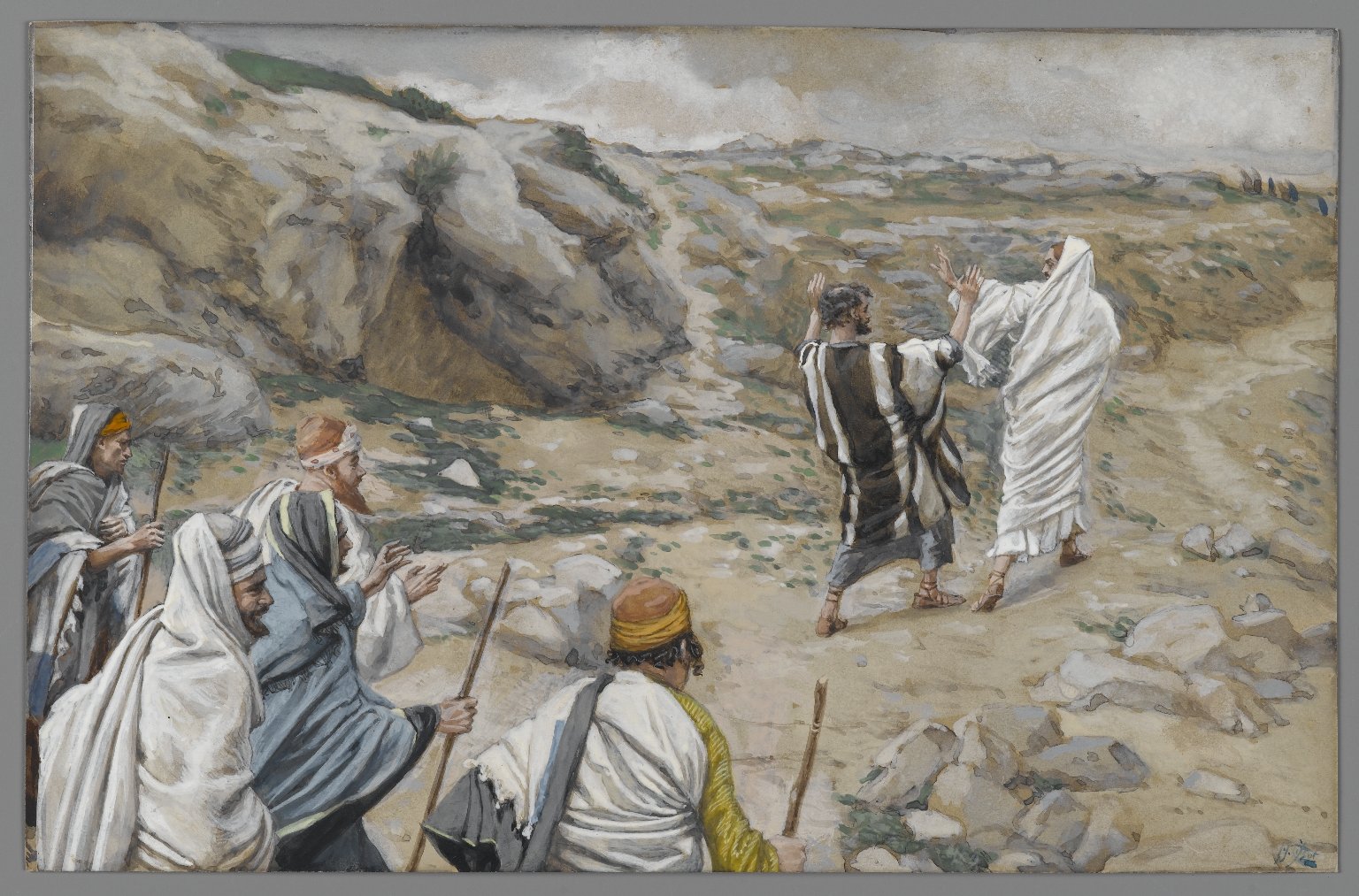
Jesus responds by telling Peter to accept what is going to happen and to continue to follow Him. Despite his profession of faith Peter still has much to learn. So Christ calls the crowd and the disciples and addresses them:
“If anyone would come after me, let him deny himself and take up his cross and follow me. For whoever would save his life will lose it, but whoever loses his life for my sake and the gospel’s will save it.”
“Os myn neb ddod ar fy ôl i, rhaid iddo ymwadu ag ef ei hun a chodi ei groes a’m canlyn i. Oherwydd pwy bynnag a fyn gadw ei fywyd, fe’i cyll, ond pwy bynnag a gyll ei fywyd er fy mwyn i a’r Efengyl, fe’i ceidw.” (Mk 8:34-35)
Our Lord tells each of us, that we have to deny ourselves, take up our cross, and follow Him. Christ calls us to live lives which honour God regardless of the cost. To be a Christian is both difficult and costly, but it has its rewards both in this life and the next. If we can demonstrate God’s sacrificial love to the world, what greater witness is there? All the wealth and power in the world cannot save our soul. They cannot make us truly happy in the way that following Christ can. God’s love is shown most fully when Jesus dies for love of us; when He bears the weight of human sin, wounded for our transgressions and bruised for our iniquities. This is how the Messiah reigns, not on a throne, but on a Cross.
So, my brothers and sisters in Christ, may we, like Peter, confess that Jesus is the Messiah, and follow Him. Let us live lives which display Jesus’ healing love to the world. Let us proclaim the Good News of the Kingdom of God, so that others may come to know and love God the Father, God the Son, and God the Holy Spirit. To whom be ascribed all glory, dominion and power, now and forever. Amen.
 Novus Motus Oxoniensis