Not so many years ago a person’s profession was often inherited from their parents, or decided for them by others. Certainly, until quite recently, many people could expect to hold the same profession for all their working life. The situation has now changed. Those in employment today can expect to have between three and seven different careers in their working life. The younger a person is, the higher that number is likely to be. Generally speaking great change is easier to handle when we are young, before we get too set in our ways. Such an upheaval faces a number of young men in this morning’s Gospel reading.
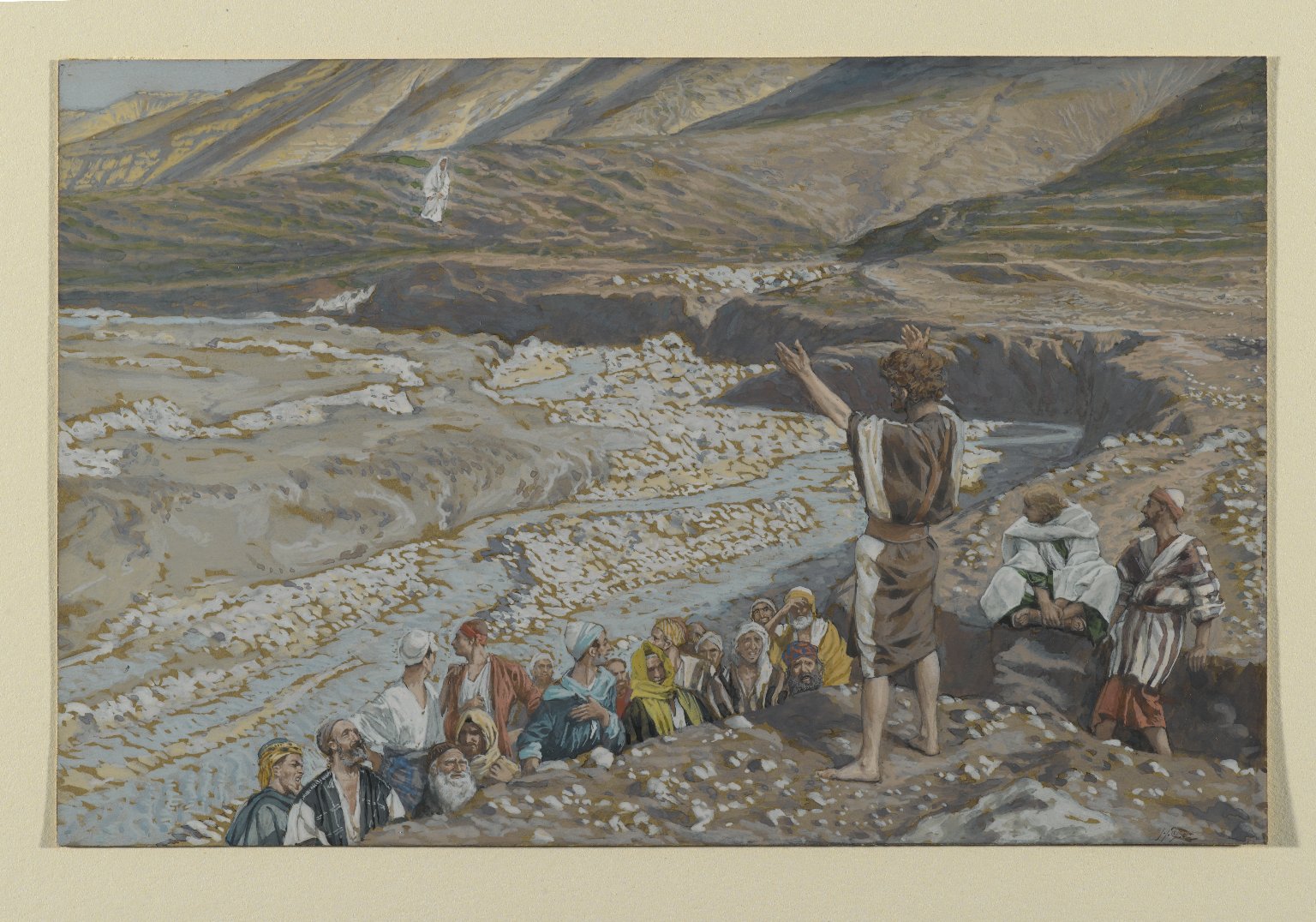
Jesus and John the Baptist know each other. They are related, being cousins and part of the same extended family. In the Gospel, John has just baptised Jesus and seen the Holy Spirit descend upon Him in the form of a dove. John declares that Jesus is the Son of God. The next day he sees Our Lord again and exclaims:
“Behold the Lamb of God!”
‘Wele Oen Duw’ (Jn 1:36)
The phrase is very familiar and used in the invitation to Communion. John the Baptist used the same phrase a few verses earlier, when he exclaimed:
“Behold, the Lamb of God, who takes away the sin of the world!”
‘Wele Oen Duw, yr hwn sydd yn tynnu ymaith bechodau’r byd’ (Jn 1:29)
Again, these words form part of our Eucharistic liturgy, the Agnus Dei. A Lamb who takes away sin means a sacrifice. So from the beginning, Jesus’ public ministry is understood to be sacrificial in character, laying down His life to take away sin, and restore humanity and God. This is why on the night before He died Jesus took bread and wine, blessed them, and gave them to the disciples, saying ,’This is my Body, this is my Blood’, and told them to ‘do this’, which is why we are gathered here today.
Once John’s disciples hear what the Baptist about Jesus, they follow Him. Jesus asks them what they are seeking, and they reply:
“Rabbi” (which means Teacher), “where are you staying?”
‘Rabbi, (yr hyn o’i gyfieithu yw, Athro,) pa le yr wyt ti yn trigo?’ (Jn 1:38)
The disciples recognise Jesus as a teacher, and want to learn from Him. But rather than simply answering their question, Our Lord issues them an invitation:
“Come and you will see.”
‘Deuwch, a gwelwch’ (Jn 1:39)
Jesus invites them to follow Him, to see where He is staying and to spend time with Him. These two disciples of John become followers of Jesus, literally and metaphorically. The Church continues to make the same invitation to the world, to come, see, and follow Jesus. These two disciples begin by spending a day with Jesus. They listen to Him, they eat with Him, and begin to have a relationship with Him. We then discover that one of the men is Andrew, and that he has a brother, called Simon. Andrew is convinced that he has found the Messiah and so he brings his brother to Jesus. When Jesus meets Simon he says,
“So you are Simon the son of John? You shall be called Cephas” (which means Peter)
‘Ti yw Simon mab Jona: ti a elwir Ceffas, yr hwn a gyfieithir, Carreg.’ (Jn 1:42)
Jesus gives Simon a new name. He calls him Cephas, which means ‘rock’ in Aramaic. In Greek this is ‘Petros’, which is how we get the name Peter. Peter will be the rock upon which Christ will build His Church (Mt 16:18). The name given by Jesus points to Peter’s future role as the leader of the Apostles. Jesus takes the initiative and begins to sketch out a future for the disciples who are following Him. It is quick, and matter of fact, and yet momentous. Jesus is gathering people to help Him with this ministry.
The Church therefore begins with a few Galilean fishermen following a rabbi whom they recognise as the Messiah. Thanks to them, and their faith in Jesus, we are here in the Church today. Faith, where we put our trust, is an important thing, affecting both who we are, and how we live our lives. Faith in Jesus turned Peter from a fisherman into a leader of the early Christians. The same faith has transformed lives over the past two thousand years, and continues to do so today.
In our baptism, God in Christ invites each and every one of us to follow Him, to ‘come and see’, as the first disciples did, and to invite others, as Andrew invited Simon Peter. To come and see who Jesus is, to get to know Him, and start a relationship with Him. This begins with our sharing in His Death and Resurrection, and ends in the glory of Heaven. What starts as an encounter deepens into a life-long relationship. People’s lives, our lives are changed when we encounter Jesus, and this is as true for us today as it was two thousand years ago. Our lives are changed when we encounter Jesus in prayer, in scripture, and in His Body and Blood at the Eucharist. Each and every one of us is called to be a disciple of Jesus, to listen to what He says, and to let this call make an impact upon our lives. Jesus longs to transform humanity, to fill us with God’s love. He also wants us to share the invitation with others.
At the Epiphany the Wise Men recognised who and what Jesus was. Now fishermen recognise Him as the Messiah. They understood that He is the Anointed One, the Christ, the One to save Israel, and all the world from their sins. Ours is a faith which can transform the world, so that all humanity can share in God’s life and love. Each and every one of us can become part of something radical and revolutionary, which can and will transform the world one soul at a time. The only way to change the world is through the love of God. This is the mission of the church, and why we continue to offer the same invitation, ‘Come and see!’ ‘Deuwch, a gwelwch’’. The journey of faith begins with Our Lord’s invitation. This may lead to our lives being radically changed, just as the fishermen became leaders in Christ’s Church. Let us then, like these first disciples, commit our lives to following Jesus and encouraging others to do the same. May we have the strength to trust and follow Christ and put our talents into His service, wherever that may lead us. Amen.
 Novus Motus Oxoniensis