How do you remember the significant people and events in your lives? Since the nineteenth century, with the invention of photography, we have tended to use photographs, and stored the pictures in albums. Nowadays, however they are more likely to be online or on a mobile phone or tablet. From the first ultrasound scans of a baby in the womb, and throughout life, we have visual reminders. But photography has only been widespread for about 150 years. Before then only the rich could afford to have pictures painted to record something for posterity. If we wished to recreate an event from the past, then a dramatic retelling was the only option available. This is exactly what St Francis of Assisi did to remember the events and people of the first nativity and to inspire the devotion of all those who saw it.
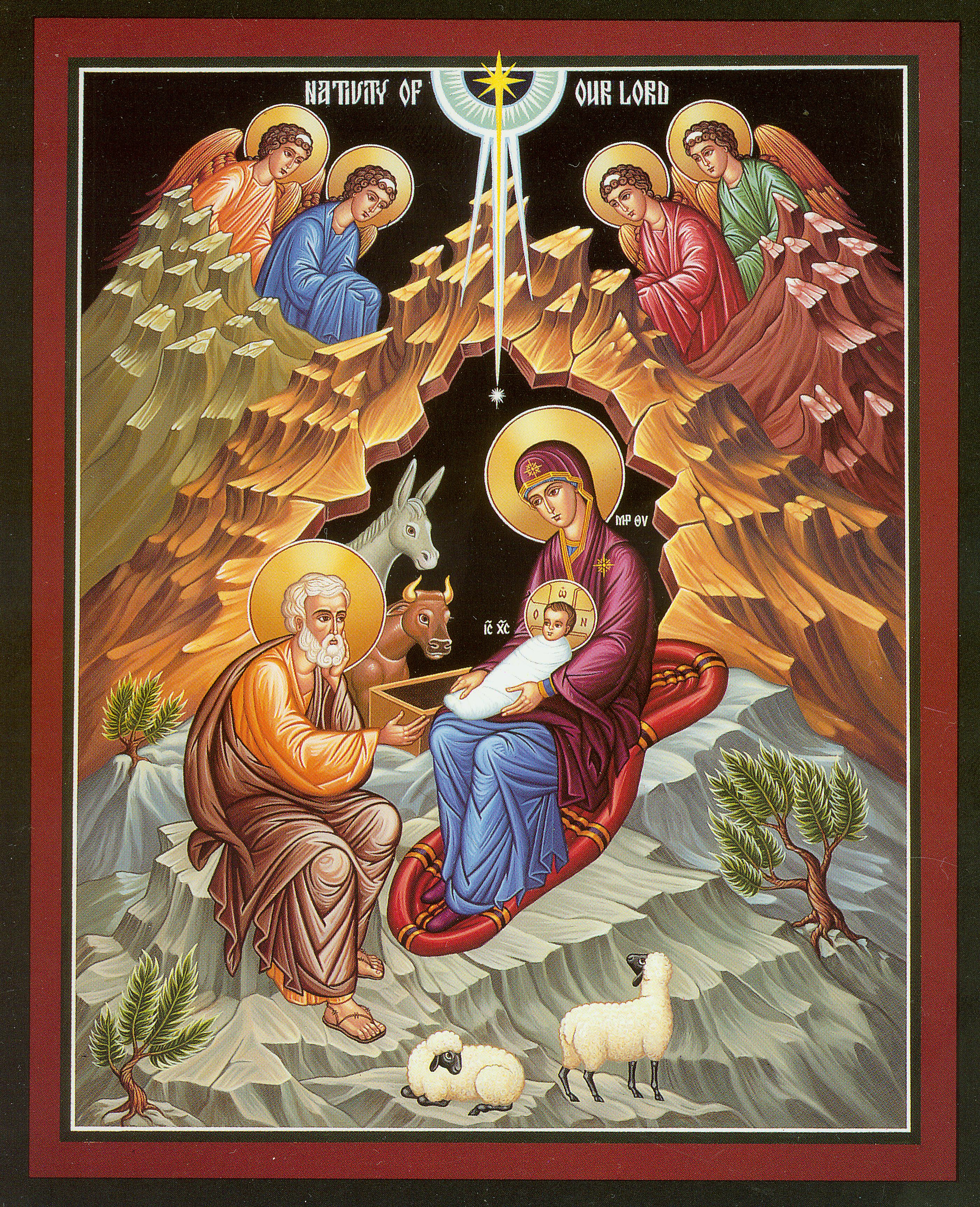
The first nativity took place exactly 800 years ago this month. The year was 1223, and the location was a cave at Greccio in Italy, around 100km north of Rome. St Francis of Assisi was inspired to recreate the first nativity in Bethlehem in an Italian village with real animals and humans playing various parts — exactly like we did in Maenclochog last night. There are good reasons why such recreations are appealing. They remind us of the reality of the Incarnation, that God took flesh in the womb of the Virgin Mary and was born in Bethlehem. The new-born baby Jesus was surrounded by an ox and an ass, and sheep, and was laid in an animals’ feeding trough. As the prophet Isaiah says:
‘The ox knows its owner, and the donkey its master’s crib’
‘Yr ych a edwyn ei feddiannydd, a’r asyn breseb ei berchennog’(Isa 1:3)
By this humble beginning God embarked on the journey of sharing our life, so that we might come to share His. Christ begins His life being laid on stone feeding trough. He will end it, taken down from the Cross and laid in a stone tomb. Such parallels are not mere coincidence. Instead, they point us towards a God who has made himself manifest, discoverable through signs, fulfilling prophecies, and declaring love for humanity.
Jesus is the Prince of Peace, and the embodiment of the Gospel of Salvation. He comes to bring comfort and redemption to the whole world.
‘for the Lord has comforted his people; he has redeemed Jerusalem.’
‘canys yr Arglwydd a gysurodd ei bobl, efe a waredodd Jerwsalem.’ (Isa 52:9)
Today our salvation has dawned, prophecy is fulfilled, and the Saviour of the world is born. The message of Isaiah is one of joy. The birth of the Messiah, Jesus Christ, is Good News. This is because He comes to bring true peace to humanity. That such peace currently eludes our world, is exactly why He came: to heal our wounds and to show us a new way to live. Throughout His life, all that Christ says and does shows us how much God loves us. The Word becomes flesh, ‘A’r Gair a wnaethpwyd yn gnawd’ and enters the world. He dwells among us ‘ac a drigodd yn ein plith ni’: a wondrous mystery which provokes us to worship, to kneel with the shepherds and to adore the God who comes among us. Jesus shares our human life so that we might share His divine life, not because we asked, and not because we are deserving, it is not something we have earned. Rather, it is the free gift of a loving and merciful God. This then is the glory of God — being born in simple poverty. Jesus, the Son of God comes to call humanity to a new way of being together, where the old order is cast aside, turning the world upside down .He offers us the possibility of living in a radically different way. Instead of war, misery and hatred, He shows us the way of peace, joy, and love.
Such is the reality St Francis sought to inspire in the hearts and lives of people eight hundred years ago. It is a message which can still inspire us, a mystery which can still transform us. So that through the grace of God we can come to share in the Divine life, born among us, in a stable not a palace. God surprises us with generosity which we cannot fathom. God subverts human expectations. Christ’s first breaths are taken surrounded by animals and shepherds. Not what one would expect of a royal birth!
God is a God of mystery and paradox. We know that we can never fully understand Him, but we can experience His love. To quote from Sir John Betjeman’s poem ‘Christmas’:
No love that in a family dwells,
No carolling in frosty air,
Nor all the steeple-shaking bells
Can with this single Truth compare —
That God was man in Palestine
And lives today in Bread and Wine.
May we greet Our Lord, born among us, and may we feed on His Body and Blood at the Altar. Given to transform us, so that we may join with the choir of angels in singing the praises of God the Father, God the Son, and God the Holy Spirit. To whom be ascribed all glory, dominion, and power, now and forever. Amen.
Merry Christmas to you all!
Nadolig Llawen i chi gyd!
 Novus Motus Oxoniensis