IN 1936 RMS Queen Mary was launched and was at that time the largest ship to cross the oceans. Through four decades and a World War she served until she was retired as a floating hotel and museum in Long Beach, California. During the conversion into a hotel her three massive funnels were taken off to be scraped down and repainted. But, on the dock they crumbled. Nothing was left of the ¾inch steel plate from which they had been formed. All that remained were more than thirty coats of paint that had been applied over the years. The steel had rusted away. While it looked fine from the outside, inside it was a different story. Appearing to be something you are not is the fundamental problem with hypocrisy.
In the Gospels the main targets for Jesus’ criticism are the contemporary Religious Authorities, and those who are hypocritical. This is because do not practise what they preach. They appear to be one thing when they are in fact something quite different.
The first reading this morning from the prophet Malachi condemns people who withhold animals from sacrifice to God and break their vows by offering something blemished. Malachi criticised the priests for not honouring God or teaching the truth. They have fallen short of what God requires of them and led His people astray, and their actions are not unlike the Pharisees in the Gospel.
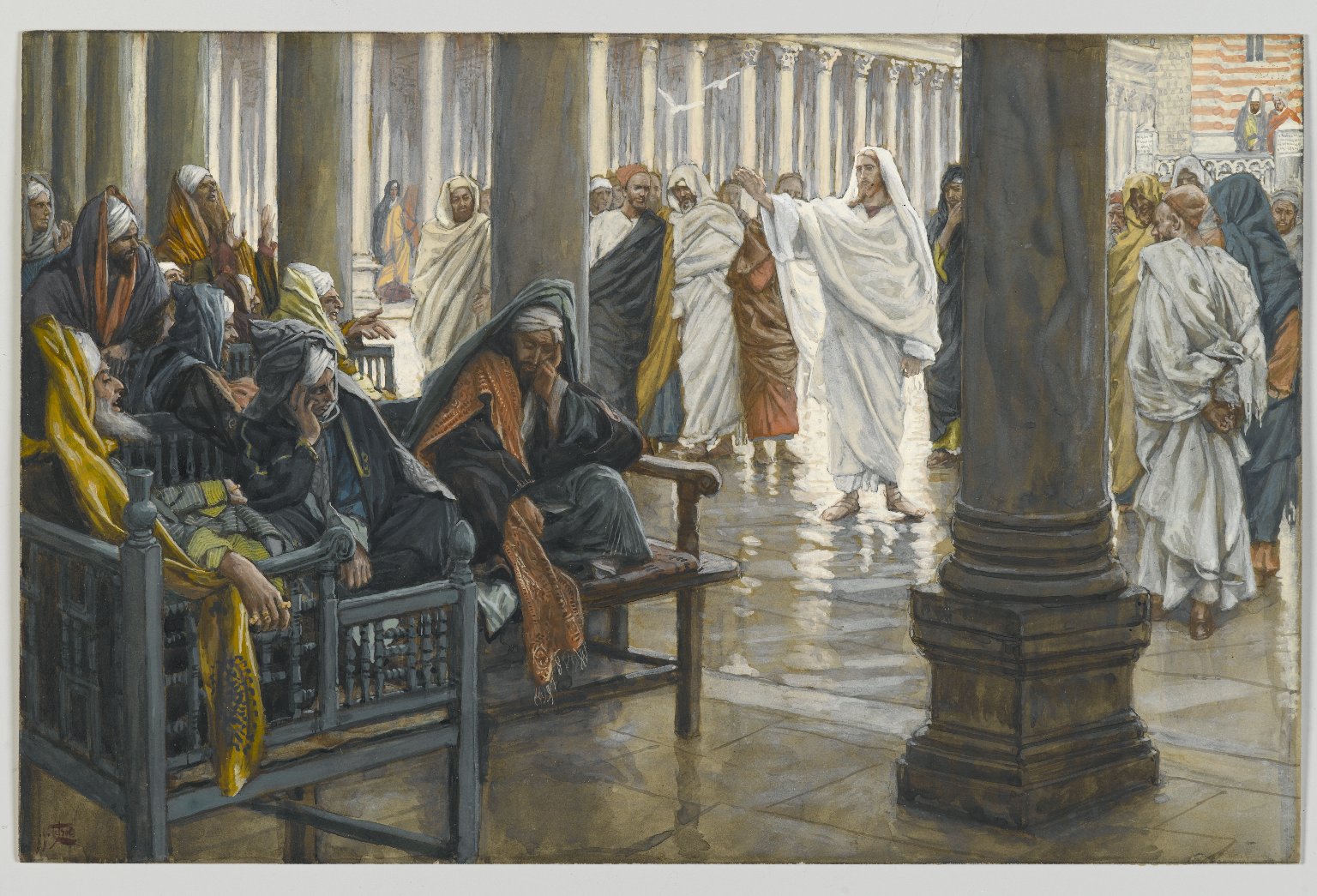
Jesus comments that the Pharisees are good at telling other people what to do, but not at doing it themselves:
“The scribes and the Pharisees sit on Moses’ seat, so practise and observe whatever they tell you—but not what they do. For they preach, but do not practise. They tie up heavy burdens, hard to bear, and lay them on people’s shoulders, but they themselves are not willing to move them with their finger.” (Mt 23:1-4)
Here we see hypocrisy in action: do as I say, not as I do. It is an easy trap to fall into. Telling someone to do something is straightforward, but doing it yourself so that you can be an example is much harder, it takes considerably more effort. The Pharisees unwillingness to practise what they preach undermines their claim to religious authority. They profess to be experts, teaching the Law from the seat of Moses, but their religious observance is all for show.
“They do all their deeds to be seen by others. For they make their phylacteries broad and their fringes long, and they love the place of honour at feasts and the best seats in the synagogues and greetings in the market-places and being called rabbi by others.” (Mt 23:5-7)
For the Scribes and the Pharisees religion is all about show, a display of piety, and honour, power, and prestige in society. This allows them to become puffed-up with pride and self-importance. They think that they are better than others and more important. People show them genuine respect, but they have become arrogant and self-absorbed. They have fallen into the trap of thinking that they are better than they are and have forgotten the important fact that all that they have, all that they are, their talents and abilities are in fact gifts from the God they are called to serve.
“But you are not to be called rabbi, for you have one teacher, and you are all brothers. And call no man your father on earth, for you have one Father, who is in heaven. Neither be called instructors, for you have one instructor, the Christ.” (Mt 23:8-10)
Our Lord then begins to teach about humility, beginning with the titles people use. It isn’t that titles are bad in themselves, but rather the attitude which can go with them. Which encourages some to use titles to exert influence over others and misuse that power. Here we see where the Scribes and Pharisees have gone wrong, rather than using their position for good they have become selfish autocratic hypocrites, who fail to practise what they preach. They place intolerable burdens on others, while living a life of ease themselves. God the Father and Jesus Christ do not operate like this. God is loving, not a tyrant, and Jesus will soon demonstrate this love for all the world to see.
“Our blessed Lord began His public life on the Mount of the Beatitudes, by preaching, ‘Blessed are the meek: for they shall possess the earth.’ He finished His public life on the hill of Calvary by practising that meekness: ‘Father, forgive them for they know not what they do.’” [Fulton J. Sheen The Cross and the Beatitudes, 1937 p. 3]
Jesus teaching has been leading up to the key point that He is trying to make:
The greatest among you shall be your servant. Whoever exalts himself will be humbled, and whoever humbles himself will be exalted. (Mt 23:11-12)
What really matters is humility. It goes hand-in-hand with love of God and neighbour, and it characterises Our Lord’s Life, Death, and Resurrection. Jesus embodies love, humility and gentleness. He practises what He preaches, just as St Paul does in his dealings with the church in Thessaly.
“For you remember, brothers, our labour and toil: we worked night and day, that we might not be a burden to any of you, while we proclaimed to you the gospel of God.” (1Thess 2:9)
In contrast to the corrupt Old Testament priests and the hypocritical Scribes and Pharisees, in Paul we have an example of kindness and true pastoral ministry, rooted in Jesus. For Our Lord, ministry is sacrificial and finds its fullest expression in the Cross. Each and every Sunday we gather to do what Jesus did on the night before He died, so that we, the people of God, might be nourished with Word and Sacrament. Jesus gives himself for us, so that we can be fed with Him and transformed by Him, who gave Himself to death, so that we might live.
Christ’s life and death are the greatest demonstration of generosity, given for all people, for you and me, that we all may have life in Christ. In thanksgiving we join with all the saints to sing the praises of God the Father, God the Son, and God the Holy Spirit. To whom be ascribed all glory, dominion, and power, now and forever. Amen.
 Novus Motus Oxoniensis