In the first five books of the Bible there are 613 commandments. 248 of these are positive statements: ‘You shall…’, while 365 (one for each day of the year) are negative commandments: ‘You shall not…’. That’s a lot to remember! Someone once asked two famous rabbis, Shammai and Hillel for a summary of the Law which could be recited standing on one leg. Shammai refused to give an answer to what he considered to be a silly question. Hillel, on the other hand, replied: ‘What is harmful for you, do not do to your neighbour; that is the whole Torah, while the rest is commentary; go and learn it’. Rabbi Hillel was the grandfather of Gamaliel, who taught St Paul, and his teaching is close to that of Our Lord in today’s Gospel.
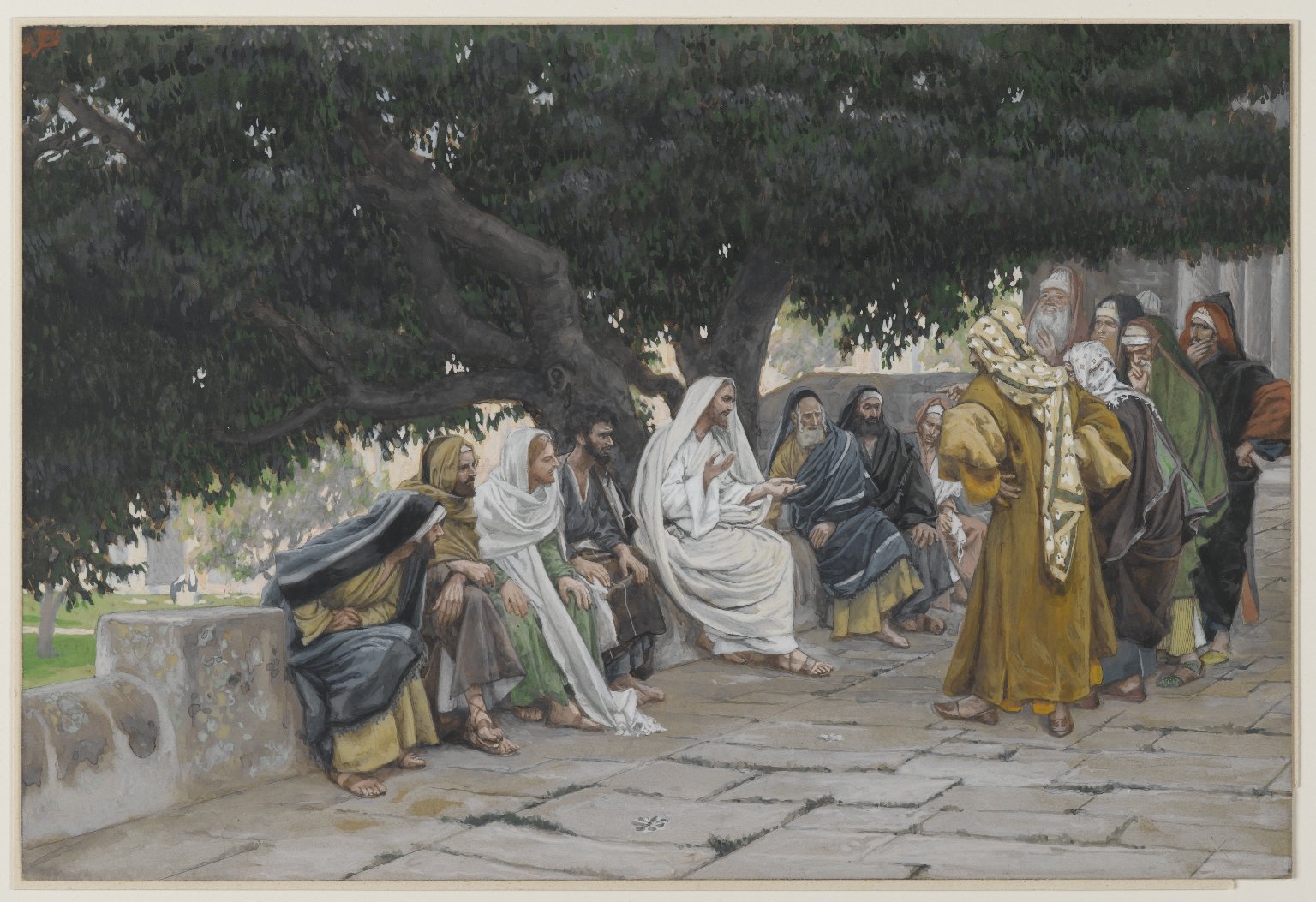
Jesus has just been debating with some Sadducees, the Jewish aristocratic priestly sect who denied the Resurrection. He has argued that understanding God as the God of Abraham, Isaac, and Jacob means that He is the God not of the dead, but of the living. Therefore the Sadducees’ beliefs about the afterlife are wrong. These words no doubt cheered up the Pharisees (rivals of the Sadducees) immensely, so they decide to come along to see who this teacher is, and to ask Him some questions.
‘And one of them, a lawyer, asked him a question to test him. “Teacher, which is the great commandment in the law?”’ (Mt 22:35-36)
This is a fair question, and Our Lord’s answer is not surprising:
‘And he said to him, “You shall love the Lord your God with all your heart and with all your soul and with all your mind. This is the great and first commandment.”’ (Mt 22:37-38)
In this answer Jesus quotes Deuteronomy 6:5, a piece of Scripture recited by Jews every single day. These are words affixed to Jewish doorposts, and begin ‘Hear, O Israel, the Lord our God is one…’ This central declaration of faith in God highlights the fact that first and foremost humans are called to love God. These words define who God is, and how we should relate to Him. We are to love God because God loves us and cares for us. God’s love makes demands of us, and requires all that we are, all that we think, and all that we do to be motivated by love of God. Jesus then adds a second commandment:
‘And the second is like it: You shall love your neighbour as yourself. On these two commandments depend all the Law and the Prophets”’ (Mt 22:39-40)
By adding these words, Jesus introduced a revolutionary idea — that the love of God and the love of neighbour are interconnected and inseparable. Our Lord invites us to recognize the image of God in every person we encounter, and to love them as we love ourselves.
Through these two commandments, Jesus provides us with the roadmap to a meaningful and Christ-centred life. To love God with all our hearts, souls, and minds is to cultivate an intimate relationship with the Divine. This is an invitation to pray, to seek God’s guidance in all things, and to surrender our will to His.
This means loving our neighbours and ourselves as God loves us, with the same costly and generous love that our Creator has for us. Jesus cuts right to the heart of the Old Covenant to show that what He is teaching is the fulfilment rather than the abolition of the Law and the Prophets. We know from elsewhere in the Gospels that when someone asks the follow-up question, ‘Who is my neighbour?’, Our Lord tells the parable of the Good Samaritan, illustrating what costly love in action looks like.
This may sound straightforward, in theory, but in practice it is less so. It takes a lifetime of practice, which is brought about through three things. Firstly, our living together as a Christian community. Secondly through being fed by word and sacrament, and thirdly by living lives which put God’s love into practice. We are to live by God’s standards and not those of the world. Christian love makes no sense unless it is rooted in the person, teaching, and example of Jesus Christ. In Him we have the example of perfect humanity to live up to. We will try, and at times fail in our endeavours, but the point is that we keep trying. To love our neighbours as ourselves is a call to compassion, empathy, and service.
As G.K.Chesterton wrote: ‘when the world goes wrong, it proves rather that the Church is right. The Church is justified, not because her children did not sin, but because they do’. The Church is to be a community of love and forgiveness. Despite this phrase having been uttered many times, I suspect that all of us fail to grasp quite how radical a departure it represents. We are to love and forgive those whom we would rather not. The Church is not just a body of people like us, whom we like, where it is always easy to get on with one another. We grow in love and forgiveness when we are among people whom we may not like, whom we would not choose to be associated with. Nonetheless, we are called to love them, to forgive them, and at the same time to be loved and forgiven by them. Since the body of Christ is made up of all baptised Christians, we are talking about a lot of different people.
All human beings are made in the image and likeness of God, and are thus imbued with a fundamental dignity, and with rights. This is the foundation of human society, and it is the will of God. As Christians we have a duty to help the weak, the vulnerable, the marginalised, and the poor. These words remain as true for us today as when they were spoken three thousand years ago. They should cause us to reflect on how the society in which we live functions. Are we loving and generous towards the weak and vulnerable? To love our neighbours as ourselves is a call to compassion, to empathy, and to service.
In a world that is plagued by self-interest and division, let us heed the words of Our Lord. Let us commit ourselves to loving God with all our hearts, with all our minds, and with all our souls, while also loving our neighbours as ourselves. In this simple yet profound message, we find the essence of our Christian calling, and the promise of a life filled with God’s grace and love.
May the love of God, made manifest through Christ, guide us through all our days, and may our love for one another shine as a beacon of light in a world that so desperately needs hope and unity. Amen
 Novus Motus Oxoniensis